Aftermath of bomb targeting a bus in Peshawar (Image, AFP)
The city of Peshawar in Pakistan has been hit by an explosion targeting a Civil Secretariat bus carrying government employees from Mardan to the provincial capital according to Dawn media. The attack took place in the vicinity of Sunehri Masjid killing at least 15 people with another 25 wounded. Two women and a child were among the casualties.
The Guardian reported,
“It’s premature to comment about the nature of the blast but it appears that explosives were planted inside the bus,” said Mohammad Kashif, a senior police official in the north-west frontier city.
“There were 40-50 people on the bus.”
Khalid Khan cyberjournalist stated “Bomb Disposal Unit says up to 8 kg explosive used in Peshawar bus blast, 15 killed, 30 injured. He added, “3 Pakistan Air Force employees, injured in Peshawar bus blast, shifted to Combined Military Hospital.” Ayesha Tanzeem said that Lady Reading hospital had received 39 injured and 10 dead bodies and that some were “critically injured”.
Shabbir Hussain Imam posted a tweet saying,
Blast on Sonehri Masjid Rd inside Cantonment raise question of security in #Peshawar. Seems militants still capable for more such strikes!
Dr Arif Alvi, Member National Assembly of Pakistan tweeted,
I condemn the blast in Peshawar bus. May the souls of the dead rest in peace and perpetrators brought to justice
No-one has claimed responsibility for the blast
Carol Anne Grayson is an independent writer/researcher on global health/human rights/WOT and is Executive Producer of the Oscar nominated, Incident in New Baghdad. She is a Registered Mental Nurse with a Masters in Gender Culture and Development. Carol was awarded the ESRC, Michael Young Prize for Research 2009, and the COTT ‘Action = Life’ Human Rights Award’ for “upholding truth and justice”. She is also a survivor of US “collateral damage”
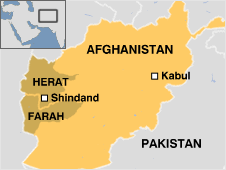
Media outlets have been reporting that tens of Taliban have been killed during infighting between rival groups over the past couple of days in Shindand district’s Zer Koh region, Herat province, and that the clashes are still ongoing; we strongly reject all such false reports.
Clashes only took place for a single day against local bandits and Arbaki militiamen.
The enemy suffered heavy casualties, lots of vehicles and other equipment was seized while the bandits, who were being backed by Kabul administration troops and aircraft, fled the battlefield and took refuge with the regime officials.
The entire region is currently under the complete control of Mujahideen. Only 3 Mujahideen of the Islamic Emirate were martyred in these clashes and 4 others injured. There is currently no problems in the area, Zer Koh region has been completely cleared and security established by the Mujahideen. All reports stating large Mujahideen casualties are hollow fabricated claims.
We urge all media to refrain from publishing such false reports and take an unbiased approach to news.
Spokesman of Islamic Emirate of Afghanistan
Qari Muhammad Yousuf Ahmadi
06/05/1437 Hijri Lunar
14/03/2016 Gregorian
End
Carol Anne Grayson is an independent writer/researcher on global health/human rights/WOT and is Executive Producer of the Oscar nominated, Incident in New Baghdad. She is a Registered Mental Nurse with a Masters in Gender Culture and Development. Carol was awarded the ESRC, Michael Young Prize for Research 2009, and the COTT ‘Action = Life’ Human Rights Award’ for “upholding truth and justice”. She is also a survivor of US “collateral damage”
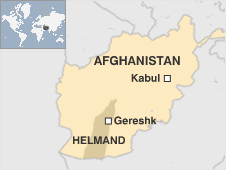
HELMAND, Mar. 11 – The operation launched by a unit of Islamic Emirate’s Martyrdom Battalion on Gerishk district administration center, Police and intelligence buildings early Wednesday morning lasted till around 11:00 pm last night with the remaining 2 Mujahideen safely extracted from the site.
The successful attack rattle the hireling enemy forces as 31 gunmen including several key commanders were killed and 37 others with more commanders wounded as well as 3 APCs destroyed and the targeted buildings sustaining heavy damage.
Officials say that 5 Mujahideen namely Ali Ahmad Adeeb Helmandi, Agha Wali Anwar Uruzgani, Niyaz Muhammad Izhar Kandahari, Sulaiman Khel Shahab Zabuli and Azad Khan Shuaib Herati were martyred, may Allah accept them.
End
Carol Anne Grayson is an independent writer/researcher on global health/human rights/WOT and is Executive Producer of the Oscar nominated, Incident in New Baghdad. She is a Registered Mental Nurse with a Masters in Gender Culture and Development. Carol was awarded the ESRC, Michael Young Prize for Research 2009, and the COTT ‘Action = Life’ Human Rights Award’ for “upholding truth and justice”. She is also a survivor of US “collateral damage”
Natasha Rather speaks on mass rape, “there have been countless attempts to cover up the incident, despite many evidences in the case”
Gender justice is high on the agenda for 5 young women seeking to highlight the suffering of abused women in Kashmir. Natasha Rather is co-author of a newly released book “Do You Remember Kunan Poshpora?” which is helping to address the stigma attached to rape. Twenty five years ago on the evening of 23 February, 1991, soldiers belonging to the 4th Rajputana Rifles conducted a cordon-and-search operation in the Kupwara district of Indian Occupied Kashmir carrying out mass rape and torture against residents of the twin villages of Kunan Poshpora. In a Question and Answer session, Natasha highlights the bravery of women who refused to remain victims and spent years fighting to hold the perpetrators to account.
1) Please introduce yourself and tell readers where you are based?
I am Natasha Rather and I am a development sector professional based in Indian Occupied Kashmir, currently working on rural sustainable livelihood issues. I am also a researcher with focus on gender justice and feminism in South Asia. I have been involved in the reopening of the Kunan Poshpora mass rape case as a co-petitioner and have also co-authored a book called “Do You Remember Kunan Poshpora?” along with 4 other activists.
2) When did you first hear about Kunan Poshpora, please explain what happened there?
The first time I heard about the mass rape of women in Kunan Poshpora was during my college days when the infamous Amarnath Land Row happened back in 2008. The protests and the curfews confined me to my house and I happened to read a report on the internet about the case. In 1991, during the intervening night between the 22nd and the 23rd of February, close to a 100 women were raped by a battalion of the Rashtriya Rifles of the Indian Armed Forces, as the men were made to come out of their homes and tortured, during a cordon and search operation in Kunan and Poshpora villages in the remote district of Kupwara.
3) How did you and your 4 other co-authors first become involved in exploring this tragedy?
In 2012, the rape of a young girl in India’s capital made the entire country rise up in protest. Some of my co-authors (Samreen, Ifrah and Munaza) were working with the Jammu & Kashmir Coalition of Civil Societies (JKCCS) in Srinagar at that time and were examining cases of systematic sexual violence against Kashmiri women perpetrated by the Indian Armed Forces, especially the case of mass rape in Kunan Poshpora. The country wide demand in India for justice for the victim of rape in New Delhi led to discussions between my co-authors about how justice was an illusory thing for the survivors of sexual violence in Kashmir and how important was it to demand justice. I was asked if I wanted to be a part of the petition to reopen this case and I agreed. The petition was thus submitted in the High Court in Srinagar in 2013 by 50 women to re-open the case and this led us on the difficult journey of fighting for justice.
4) How did you gain the trust of the victims?
The unfortunate incident of Kunan Poshpora has served as an attention grabbing human interest story and has been reported in the media without any sensitivity for the survivors. These women have been portrayed as victims. The reports have been devoid of any recognition for the independent struggle that these people have put up for the last 2 and half decades. The people of these twin villages thus have a natural tendency to be wary of strangers. When we first visited Kunan Poshpora, it was to inform the people about the initiative of 50 women from various backgrounds to reopen the case, through the petition. It was after a few visits when the elders of the village were convinced that concrete work was being done and visits were not only to write reports and human interest stories, was how we really gained trust of the people.
5) What was your aim in writing the book?
The episode of mass rape in Kunan Poshpora has been falsified and denied by the Indian Armed Forces and there have been countless attempts to cover up the incident, despite many evidences in the case. The aim behind writing the book was to place the facts and evidences within the realm of public knowledge. We also wanted to highlight how the social life of these survivors was affected after this incident, despite which they never stopped their struggle. There have been other cases of sexual violence by the Armed Violence against not only women but also men. The aim was also to bring these facts to the fore and highlight how the impunity is guaranteed in such cases.
Additionally, in our struggle against occupation, it is important that we document each event and not lose it to memory. Kashmiri people need to author their own history to prevent cases like Kunan Poshpora from being forgotten or become an obscure part of a distorted version of our history.
6) What practical issues did you face researching an incident that occurred 25 years ago?
Researching and writing about an incident that took place 25 years back had us faced with many difficulties. To rely upon people’s memories for documentation can be a tricky thing, especially when those memories are repressed. It took us long sessions of discussions with the survivors to understand the situation back then. Even recreating a social map of the twin villages as they were in 1991 was a tough task. There were several reports to read and also some that we could not find or access and had to rely upon what we could obtain.
7) What reaction have you had from Kashmiris?
There have been mixed reactions from fellow Kashmiris but mostly positive. Initially, there were many people who tried to dissuade us from venturing into this highly dangerous domain. But we have mostly got appreciated our efforts in reopening the case and documenting the 25 years of struggle of the survivors. There has been a lot of encouraging response to our initiative and work.
8) How have you been treated by Indian authorities?
Since the time that we filed the petition the authorities have been checking our backgrounds. We have been treated as some miscreants who are trying to get into ‘human rights’. Receiving condescending comments from the authorities’ side outside the court rooms has been a regular thing. Just before the release of the book in Srinagar, the authorities made sure that we have issues with finding a venue that is spacious enough to accommodate the number of people that had shown willingness to attend the event.
9) You recently launched your book, “Do You Remember Kunan Poshpora?” please describe this event and what you achieved?
The book was first launched at the Jaipur Literature Festival on the 24th of January this year where one of my co-authors Essar Batool, spoke about the book. The audience, which was mostly Indian, received the book very well. In fact, many people from India showed a lot of interest in knowing more about the struggle of Kashmiri people against oppression. The book was released in Srinagar on the 23rd of February by the survivors of the mass rape. The response was overwhelming, seen in jam packed hall where people chose to stand for close to 2 hours to be a part of the event (owing to the limited number of chairs in a small hall). We have received a lot of encouragement and appreciation for this work from many quarters. It was commendable that so many young people spoke their minds out about oppression and their own experiences.
10) How has the book helped the survivors of Kunan Poshpora?
The book, as mentioned above presents evidences in the case and references from official documents which proves that the incident took place and that this is not a “hoax” as has been termed by the Indian State. The book has helped in making known the nuances of the case, the incident of that night and the struggles that ensued. It has also led to discussions on issues of systemic violence in Kashmir and associated impunity. There has been an increase in the support for the survivors in their struggle for justice.
11) What do you hope readers will take-away from reading your book?
Apart from understanding the case of Kunan Poshpora, which the book highlights, the readers will also be able to understand the importance of writing narratives and documentation of memory. In the book, we also write about own experiences of coming out from ignorance into becoming conscious of the reality around us. I am hoping that the book will inspire more young people to read and write about our history.
12) How will you continue your fight for truth and justice?
The mass rape and torture of Kunan Poshpora is not the only one case of violence against the people of Kashmir by the Indian Armed Forces. The people of Kashmir have been targeted and violence has perpetrated in various forms. I shall continue writing and documenting to protest against this unwarranted treatment.
13) What would be the best outcome for survivors of this tragedy?
Ideally, the best outcome for the survivors of this tragedy would be that the perpetrators are brought to justice. Unfortunately, no case of violence or crime against a member of the Indian Armed Forces has been tried in civilian court. No prosecutions have been made so far. These Forces continue to be granted impunity under legislations such as the Armed Forces Special Powers Act. The case which is in the Supreme Court of India is being treated trivially by the Indian State and all tactics have been used to delay progress. We hope that justice is provided yet we realize the improbability of this happening.
Thank-you for your time
Links
“Kashmir: The Kunan-Poshpora Tragedy : Decades of Inaction “Mass Rape by Indian Army”
Carol Anne Grayson is an independent writer/researcher on global health/human rights/WOT and is Executive Producer of the Oscar nominated, Incident in New Baghdad. She is a Registered Mental Nurse with a Masters in Gender Culture and Development. Carol was awarded the ESRC, Michael Young Prize for Research 2009, and the COTT ‘Action = Life’ Human Rights Award’ for “upholding truth and justice”. She is also a survivor of US “collateral damage”
Munaza Rashid says women of Kunan Poshpora are real life fighters, “readers should learn from the strength of these survivors”
Munaza Rashid is one of five women whose determination in co-authoring the newly released book “Do You Remember Kunan Poshpora?” on Kashmiri Women’s Resistance Day (23rd Feb) has helped break the stigma for survivors of mass rape. Twenty five years ago on the evening of 23 February, 1991, soldiers belonging to the 4th Rajputana Rifles conducted a cordon-and-search operation in the Kupwara district of Indian Occupied Kashmir. Horror unfolded as they allegedly subjected locals to prolonged sexual abuse and torture in the twin villages of Kunan Poshpora. Munaza has helped bring these stories to light and talks of her experience.
1) Please introduce yourself and tell readers where you are based?
I am Munaza Rashid. One of the co-author of the book “Do You Remember Kunan Poshpora”. I am a practising advocate in Srinagar District. I have been a part of the team that drafted the public interest litigation in J&K High Court.
2) When did you first hear about Kunan Poshpora, please explain what happened there?
I heard rather read about Kunan-Poshpora through a local daily. That had published an article on women (survivors) from these villages.
3) How did you and your 4 other co-authors first become involved in exploring this tragedy?
We did not discover it together. We somehow through one or other source knew about it. But yes we decided to work on it together, to ensure it is not repeated again.
4) How did you gain the trust of the victims?
We were the only group (as said by the victims) who had first done something authentic and then met them. This built confidence in them about us. All through people from various profession’s would go to meet them, ensure them, give them high hopes and do nothing.
5) What was your aim in writing the book?
The main aim was to tell the truth. To bring perpetrators to shame. Document our history and struggle of survivors. To tell stories that were unknown to the world about that night, the life after that, struggle of survivors etc.
6) What practical issues did you face researching an incident that occurred 25 years ago?
The official documents we had through (RTI) right to information act and other sources were incomplete and some have even been lost. All though it still didn’t cause much damage. The amount of information we have through these official documents is still legally enough.
7) What reaction have you had from Kashmiris?
So far the reaction is very good. People are appreciating our work. This has also someway brought awareness in people how much important is ‘documentation’ in a conflict zone.
8) How have you been treated by Indian authorities?
They haven’t come out openly rebuking our writing or haven’t taken any hard stand. But knowing how India works through it’s think tanks may be they are preparing a counter ‘fabricated’ argument.
9) You recently launched your book, “Do You Remember Kunan Poshpora?” please describe this event and what you achieved?
The launch was on 23rd Feb. It was on the intervening night of 23rd/24th Feb 1991 the crime of mass rape was perpetrated by Indian Armed Forces. After filing the (PIL) public interest litigation this day is commemorated as ‘Kashmir Women’s Resistance Day’. To remember the struggle and fight of Kashmiri women in this excessively army occupied state including the women of kunan-poshpora. It was this year on this day (23/02/2016) we decided to launch the book. The reason for selecting this day is same, as mentioned earlier. The event was very good and the most appreciating thing was the number of female audience that turned up was beyond expectation. The reason being is obviously the kind of patriarchal society we live in we don’t expect women to come out openly and speak about remembrance and struggle.
10) How has the book helped the survivors of Kunan Poshpora?
The book has helped in many ways one of which is that they don’t have to go out explaining to every one how and what happened. The documentation inform of book will prevent them from the ordeal of going through that trauma again and again while narrating the stories of that night and after that night.
11) What do you hope readers will take-away from reading your book?
The readers will come across the stories of real life fighters. So the readers should learn from the strength of these survivors. They should derive courage from these survivors and their stories.
12) How will you continue your fight for truth and justice?
We will continue by documenting not just this crime but every crime perpetrated on our generation and generation before us. Our occupier’s consider rape a weapon to win war but we consider pen the best weapon against them.
13) What would be the best outcome for survivors of this tragedy?
Nothing can replace the trauma they went through in these 25 years. But the best outcome is the strength and unity they derived out of it. The best out come for others will be the lesson they learn from the long tiring battle fought by these survivors.
Carol Anne Grayson is an independent writer/researcher on global health/human rights/WOT and is Executive Producer of the Oscar nominated, Incident in New Baghdad. She is a Registered Mental Nurse with a Masters in Gender Culture and Development. Carol was awarded the ESRC, Michael Young Prize for Research 2009, and the COTT ‘Action = Life’ Human Rights Award’ for “upholding truth and justice”. She is also a survivor of US “collateral damage”
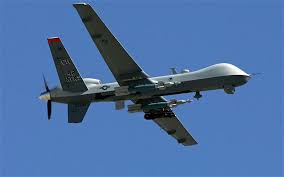
Drones have killed hundreds of civilians in Pakistan, Yemen
(Image Telegraph)
In a wide-ranging foreign policy profile of President Obama inThe Atlantic, his deputy national-security adviser, Ben Rhodes, has said that the President “has not had a second thought about drones”.
The US covert drone programme has killed hundreds of innocent civilians in Yemen and Pakistan – countries with which the US is not at war. The details of the programme, and its victims, are shrouded in secrecy. Earlier this week, however, it was announced that the Obama administration will “publicly release an assessment of combatant and non-combatant casualties resulting from strikes taken outside areas of active hostilities since 2009”.
One of international human rights NGO Reprieve’s clients, Faisal bin Ali Jaber, is a Yemeni man whose civilian brother-in-law and nephew were killed in a 2012 US drone strike. The US Government has never offered official acknowledgement of, or an apology for, the strike.
Commenting, Joe Pace, attorney with international human rights group Reprieve which represents civilian victims of drone strikes, said: “According to his interview in the Atlantic, President Obama hasn’t had ‘a second thought about drones’. What a luxury. It is not a luxury that Faisal bin Ali Jaber – whose nephew and brother-in-law were innocent Yemeni civilians killed by a US drone – gets to enjoy. Drones, and the irrevocable damage they have wrought on his family and his life, plague Faisal’s every waking thought. The covert drone programme is not something that can be carried out without a care. It has wrought untold damage on entire communities in countries with which the US is not at war, and it must be stopped.”
ENDS
Carol Anne Grayson is an independent writer/researcher on global health/human rights/WOT and is Executive Producer of the Oscar nominated, Incident in New Baghdad. She is a Registered Mental Nurse with a Masters in Gender Culture and Development. Carol was awarded the ESRC, Michael Young Prize for Research 2009, and the COTT ‘Action = Life’ Human Rights Award’ for “upholding truth and justice”. She is also a survivor of US “collateral damage”.
HELMAND, Mar. 10 – Reporter of Al Emarah website says that the martyrdom operation launched 06:00 am Wednesday morning on Gerishk administration center, police HQ, intelligence and other enemy buildings is still ongoing today (Thursday).
So far an ANA corps commander (Sharif), 2 police commanders (Noor Ahmad and another known as ‘De Baba Zoi’) along with 14 other hirelings have been killed while 33 more including 2 key commanders (Abdul Razziq and Baseerak) have been wounded, according to initial information.
3 APCs have also been destroyed in the ongoing fighting and heavy damage caused to the buildings.
Reports also add that 5 martyrdom seekers namely Ali Ahmad Adeeb Helmandi, Agha Wali Anwar Uruzgani, Niyaz Muhammad Izhar Kandahari. Sulaiman Khel Shahab Zabuli and Azad Khan Shuaib Herati have attained their desire of martyrdom (may Allah accept them).
More details about the operation will be updated as information arrives.
End
Carol Anne Grayson is an independent writer/researcher on global health/human rights and is Executive Producer of the Oscar nominated, Incident in New Baghdad. She is a Registered Mental Nurse with a Masters in Gender Culture and Development. Carol was awarded the ESRC, Michael Young Prize for Research 2009, and the COTT ‘Action = Life’ Human Rights Award’ for “upholding truth and justice”. She is also a survivor of US “collateral damage”.
BADGHIS, Mar. 10 – The enemy convoy which launched an operation for the past 3 weeks in areas between Sang-e-Atish and Aab Kamari districts of Badghis province finally fled the area last night due to unrelenting Mujahideen attacks.
Reports say that Mujahideen carried out a large scale attack on the enemy from 05:00 pm yesterday till 03:00 am local time today, forcing the enemy to flee and leave behind the corpses of many gunmen.
An APC, 3 pickup trucks, 15 motorbikes, mortar tube, 82mm recoilless rifle, 2 Dshk heavy machine guns, 100 boxes of ammunition rounds and a sizable amount of other weapons and equipment was also seized.
More details will be updated later.
End
Carol Anne Grayson is an independent writer/researcher on global health/human rights and is Executive Producer of the Oscar nominated, Incident in New Baghdad. She is a Registered Mental Nurse with a Masters in Gender Culture and Development. Carol was awarded the ESRC, Michael Young Prize for Research 2009, and the COTT ‘Action = Life’ Human Rights Award’ for “upholding truth and justice”. She is also a survivor of US “collateral damage”.
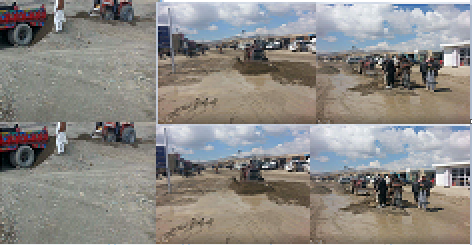
PAKTIA, Mar. 9 – The Islamic Emirate’s Mujahideen in collaboration with the locals have launched road reconstruction development projects in Zurmat district of Paktia province aimed at rebuilding a series of roads, route and ways to ease traffic and travel on foot for the troubled and oppressed countrymen.
The restoration of roads and reconstruction project in the area came into operation as Mujahideen gained control of the region, forcing the enemy to abandon a large and key base with a strategic importance in Zurmat district of Paktia province.
This comes as Mujahideen have launched public works projects and similar programs in a number of provinces across the country such as Kunduz, Ghazni, Baghlan, Nuristan, and so on.
Several bridges, roads, canals and the likes are said to be operational at the moments.
End
Carol Anne Grayson is an independent writer/researcher on global health/human rights and is Executive Producer of the Oscar nominated, Incident in New Baghdad. She is a Registered Mental Nurse with a Masters in Gender Culture and Development. Carol was awarded the ESRC, Michael Young Prize for Research 2009, and the COTT ‘Action = Life’ Human Rights Award’ for “upholding truth and justice”. She is also a survivor of US “collateral damage”.
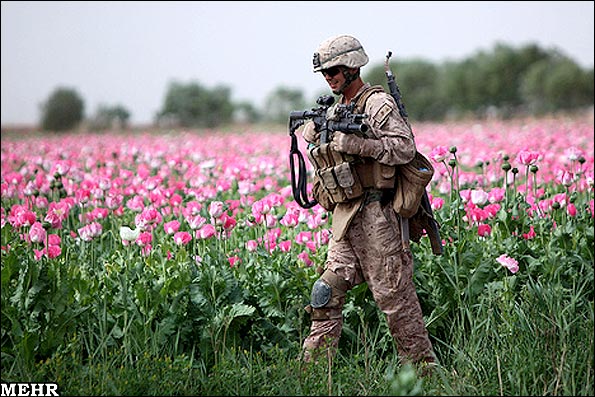
During the blessed era of the Islamic Emirate, narcotics were banned and the decree of His Excellency the late Amir-ul-Momineen Mullah Mohammad Umar Mujahid (may his soul rest in peace) about the prohibition of poppy cultivation was warmly welcomed by the masses and in a remarkably short span of time, Afghanistan became a drug free country which was admitted by the outside world too.
Unfortunately poppy cultivation became the emblem of our beloved country Afghanistan after the brutal invasion and illegitimate foreign occupation on top of various other adversities. A heart-wrenching reality that more than three million people including children and women are now addicted to this poisonous and devastating drug in a sparsely populated country like Afghanistan.
Though the foreign invaders and their internal stooges launched some impressive but shallow projects and campaigns to prevent this menace which adversely affected the issue due to the insincerity of its planners and instead of eliminating or reducing poppy cultivation, it was multiplied manifold as the number of addicted people is increasing day by day.
Despite all the anti-drug slogans and vows of foreign occupiers, there are verified and authentic reports which prove that they are themselves largely involved in drug trafficking which is exported from Afghanistan on regular basis via military planes and various other means to Europe, America and several other black markets of the world.
The case of internal stooges is no better than their foreign masters as the puppet Kabul regime is thoroughly involved in this malicious business. The number officials not involved can be counted on fingers tips. High ranking officials like some advisors of presidential palace as well as most of the ministers, governors, military commanders, district heads and numerous other low ranking officials are the active members of regional and international drug mafia. Verified reports have been published in local and international media on various occasions in this regard.
The stooge Kabul regime which vows the comfort and prosperity of ordinary people has not been able, despite the countless foreign add and funds, to build a single well-facilitated hospital throughout the country for the treatment and reintegration of addicts who are left with no other option but to turn to neighboring countries for cure.
The souvenirs of western invasion for Afghanistan are insecurity, deterioration of economic situation, increased unemployment, rising prices of basic commodities, spread of poverty and the wide-spread corruption in each and every department of the stooge admin. It was unprecedented in our culture and history that the poverty-stricken Afghans sell their detached parts of their own bodies (i.e. their off-springs) in the market. Obscenity has become order of the day, alcohol, heroine, hemp-extract and opium are widely popularized among the masses of our pious homeland.
With the exception of a negligible number of people whose vested interests go parallel with the malicious objectives of foreign invaders, the vast majority of people are longing for the golden era of the Islamic Emirate when there was ideal peace and stability under the shadow of Islamic Sharia. When there was no corruption, no nudity and obscenity, the people were comparatively self-sufficient from economic point of view. Basic commodities and requirements were largely available for reasonable prices to the common people. On the other hand, narcotics and other detrimental substance was completely eliminated from ninety five percent territory under the control of the Islamic Emirate. Unfortunately, after the malicious invasion of Afghanistan, it has been enlisted in the major poppy cultivation countries of the world!!!
End
Carol Anne Grayson is an independent writer/researcher on global health/human rights and is Executive Producer of the Oscar nominated, Incident in New Baghdad. She is a Registered Mental Nurse with a Masters in Gender Culture and Development. Carol was awarded the ESRC, Michael Young Prize for Research 2009, and the COTT ‘Action = Life’ Human Rights Award’ for “upholding truth and justice”. She is also a survivor of US “collateral damage”.






 Carol Anne Grayson (Radical Sister) blog