Armed Groups in Syria and Iraq: A Brief Background

armed-groups1

Guest blog with kind permission article originally published by 

A Jurists War

The Syria / Iraq conflict has witnessed several armed groups that are operational against President Bashar al-Assad. In the midst of the Syrian conflict, the armed groups consist of paramilitary troops, armed civilians, and deserted/defected soldiers from the Syrian army. Primarily, modest factions emerged from local Sunni Muslims in the region, however with external state influences backing both Shi’i and Sunni sides of the conflict, the formations of the factions have become a network of units. The influx of foreign fighters originating from Europe, Middle East and North Africa has caused international and domestic security concerns, as many of the armed groups on the ground have now been designated as terrorist organisations by the US and others. This note will focus on the armed groups that foreign fighters are joining, so as to provide context and background to the conflict mapping.

Note: It is beyond the scope of this piece to provide a detailed analysis of the groups, as it is appreciated that armed groups have developed throughout the course of the conflict, and a cursory briefing will not provide sufficient depth to necessitate the reality on the ground.

Primary Rebel Coalition

Free Syrian Army (FSA)
The Free Syrian Army consists of soldiers that have deserted their positions, or defected. The establishment in 2011 was effectively a brand name, in which other smaller and autonomous non-state actors started to employ. The FSA did not have any effective control or command structure of other scattered autonomous group. The FSA have been classed as secular in their outlook in comparison to other fighting forces, such as those affiliated with al-Qaeda.

The Islamic Front
The Islamic Front consists of seven armed groups that have joined together in view of creating an independent political, military and social formation. As a consequence, there are approximately 55,000 fighters under this banner. Groups as follows have joined: Harakat Ahrar al-Sham al-Islamiyyah, Jaysh al-islam, Suqour al-Sham, Liwa al-Tawhid, Liwa al-Haqq, Ansar al-Sham and The Kurdish Islamic Front. The aims and objective of the coalition is to remove President Assad and his regime, and create an Islamic state. The Islamic Front does not affiliate with al-Qaeda. The Islamic Front has accepted foreign fighters in their groups, in view of pursuing the objectives, although currently this is an exception rather than a rule.

Islamic State of Iraq and the Shaam (ISIS)
The Islamic State of Iraq and the Shaam (ISIS) is a Sunni group that seeks to establish an Islamic state, governing by Islamic jurisprudence across Syria and Iraq. The group originated from Iraq, as a consequence of the US led invasion to remove Saddam Hussein. It was branded as al-Qaeda in Iraq (AQI) and was headed by Abu Musab al-Zarqawi in 2003. When a US air-strike killed al-Zarqawi in 2006, Abu Ayyub al-Masri – an Egyptian explosives expert with links to al-Zawahiri was given leadership of the non-state actor. However, with an appeal needed to employ local support and territorial objectives in Iraq, al-Masri adopted a new brand, called the Islamic State of Iraq (ISI).

Al-Qaeda had a deep interest in the Syrian conflict in 2011, and consequently directed its affiliate in Iraq, Islamic State of Iraq (ISI) to assist in the creation of Jabhat al-Nusrah (JN).
In 2012, the ISI re-branded itself as Islamic State of Iraq and the Levant (ISIL) – alternatively known as The Islamic State of Iraq and Shaam (ISIS). This was due to a more transnational objective by the non-state actor, so as to extend their efforts and objectives, as fighters had already spilled over into Syria, in the wake of the uprisings in 2011.

In April 2013, Abu Bakr al-Baghdadi, the leader of ISI claimed a merger with al-Nusrah, intending to unite the Iraqi and Syrian factions creating Islamic State of Iraq and Shaam (ISIS).
ISIS has conducted numerous operations, including suicide operations that resulted in the capture of military bases. ISIS has 3000-8000 fighters, and it is believed that this number is growing with a sustainable influx of foreign fighters. ISIS’ relationship with other non-state actors has effectively placed them in a position of internal conflict between groups. ISIS is operational across Syria, and has gained substantial effective control of Iraq’s territory, including Ramadi, Falluja, and Mosul in June 2014.

ISIS have overtaken considerable territory in Iraq, with assistance from the local Sunni groups that have joined the ranks of ISIS, including The Islamic Army in Iraq – in view to alleviate the grievances the Sunni’s have with the al-Maliki government in relation to the disparity of national policies and governance between the Sunni and Shi’i populations for the past 10 years. Consequently, the local Sunni population view ISIS in a completely different lens, as opposed to ISIS’ activities in Syria – however this view may have changed. Although President Obama may pursue ISIS with use of force, the president has also reinforced the notion that ultimately a political change must occur in leadership by stating, “[a]bove all, Iraqi leaders must rise above their differences and come together around a political plan for Iraq’s future. Shia, Sunni, Kurds — all Iraqi’s — must have confidence that they can advance their interests and aspirations through the political process rather than through violence”. This social-political tension is one of the rationales that ISIS wanted to address, and therefore they are receiving assistance from other factions from within Iraq. ISIS operates independently, and does not have any connection to al-Qaeda – the implications of this severed connection will be inferred upon in a separate blog note.

In June 2014, ISIS rebranded itself as the Islamic State (IS) as it claimed it had declared a Caliphate, with Abu Bakr al-Baghdadi as the Caliph. An official document was released, citing the Islamic objectives and rationales for the Caliphate, calling upon Muslims to join the ranks of Islamic State (IS), formerly known as The Islamic State of Iraq and Shaam (ISIS). This is an unprecedented move by any armed group on modern conflicts around the globe, and has trigger great tensions between other groups that are fighting in Syria, Iraq and other realms of conflict. The Islamic State does not recognise the colonial Sykes Picot agreement, and intends to expand its territorial gain beyond Iraq and Syria.

Jabhat al-Nusrah (Support Front)
Jabhat al-Nusrah (JN) – a group with approximately 7000 –to- 10000 fighters, was essentially assisted by ISIS. The United States (U.S) designated al-Nusrah a terrorist organisation , in which triggers a plethora of legal, political and military consequences that will be analysed later. However, there was a turning point in the formation of the group in 2013, as the leader of al-Nusrah, Abu Mohammad al-Julani, rejected a merger with ISIS due to political and strategic reason. There are also reports that the merger did not occur due to claims of brutality by ISIS in Syria. This triggered internal conflict between the al-Nusrah and ISIS, and thus operated as separate armed groups or entities on the ground. Ayman al-Zawahiri, the leader of al-Qaeda, attempted reconciliation between the two groups and urged them to stay located within their country of origin, however ISIS refused, as this would reinforce a colonial border. Consequently, ISIS and JN operate independently in Syria, conducting military objectives, and providing aid and social assistance to the Syrian people. Foreign fighters assisting in the armed struggle against President Assad have joined both groups.

Of key importance is understanding that JN attracts a great deal of membership from foreign fighters, and that while the foreign fighters have their own distinct group, they are all under the direct leadership of a Syrian. Despite media representations, of particular surprise is the amount of support JN receives among the local population. Unlike ISIS, JN appears to also have gained the respect and trust of the other fighting groups, particularly those under the general banner of the Islamic Front.

Unlike the traditional methodology of al-Qaeda Central (AQC), that concentrated its objectives on the ‘far enemy’, the approach taken by JN seems to be far more in line with a traditional internal armed conflict, concentrating their attacks directly at pro-Assad forces and military objectives.

Other Anti-Assad Groups
There are hundreds of groups fighting on the ground in Syria, majority of them cooperate with each other, although this relationship differs across locations.

Jaysh al-Muhajirin wa-al-Ansar (Army of the Emigrants and Helpers)
This non-state actor consists of hundreds of fighters, majority of them being foreign fighters, located in Aleppo. The leader is Abu Omar al-Shishani, a veteran Chechen fighter, and under his command, the non-state actor has affiliated with ISIS.

Jund al-Shaam (Soldiers of the Levant)
Jund al-Shaam is a smaller non-state actor, operating highly independently in the conflict. Majority of the soldiers originate from Northern Lebanon, and work alongside other networks, particularly in Homs.
Several other factions exist, such as Fatah al-Sham; the Abdullah Azzam Brigades (AAB); Turkiye Halk Kurtulus Partisi-Cephesi (THKP-C); Kateeba al-Kawthar (KAK); and the Popular Front for the Liberation of Palestine-General Command (PFLP-GC). The British government has proscribed these groups as international terrorist organisations, and included them in the proscribed groups under Schedule 2 of the Terrorism Act 2000.

[END]

Carol Anne Grayson is an independent writer/researcher on global health/human rights/WOT and is Executive Producer of the Oscar nominated, Incident in New Baghdad . She is a Registered Mental Nurse with a Masters in Gender Culture and Development. Carol was awarded the ESRC, Michael Young Prize for Research 2009, and the COTT ‘Action = Life’ Human Rights Award’ for “upholding truth and justice”. She is also a survivor of US “collateral damage”.

Posted in Uncategorized | Leave a comment

Obama press release to commemorate 50 year anniversary of Selma to Montgomery marches

mlk-1965-selma-montgomery-march-P

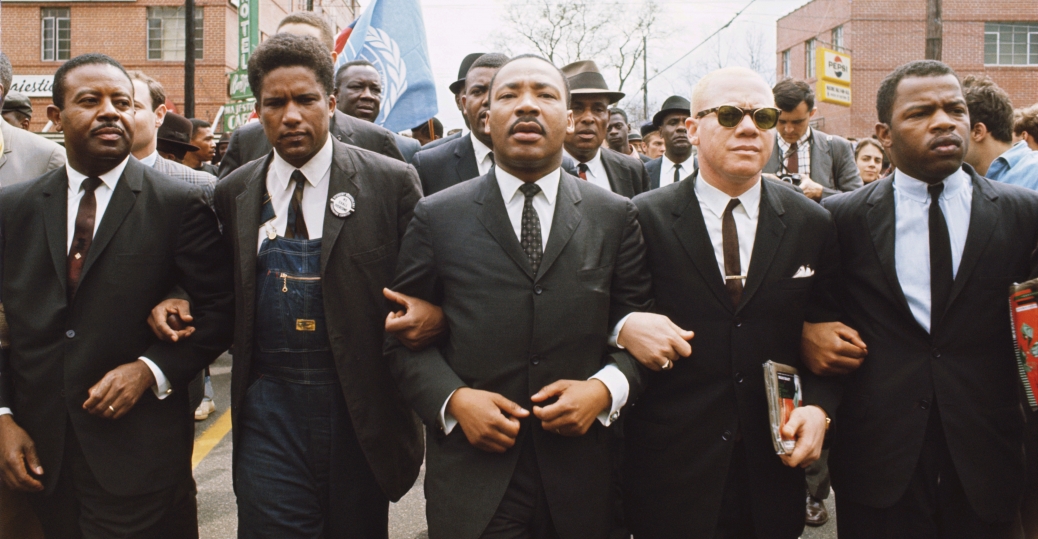
Martin Luther King leading march from Selma to Montgomery to protest lack of voting rights for African Americans. Beside King is John Lewis, Reverend Jesse Douglas, James Forman and Ralph Abernathy. March 1965

(via History)

Remarks by the President at the 50th Anniversary of the Selma to Montgomery Marches

Edmund Pettus Bridge

Selma, Alabama

2:17 P.M. CST

AUDIENCE MEMBER:  We love you, President Obama!

THE PRESIDENT:  Well, you know I love you back.  (Applause.)

It is a rare honor in this life to follow one of your heroes.  And John Lewis is one of my heroes.

Now, I have to imagine that when a younger John Lewis woke up that morning 50 years ago and made his way to Brown Chapel, heroics were not on his mind.  A day like this was not on his mind.  Young folks with bedrolls and backpacks were milling about.  Veterans of the movement trained newcomers in the tactics of non-violence; the right way to protect yourself when attacked.  A doctor described what tear gas does to the body, while marchers scribbled down instructions for contacting their loved ones.  The air was thick with doubt, anticipation and fear.  And they comforted themselves with the final verse of the final hymn they sung:

“No matter what may be the test, God will take care of you;
Lean, weary one, upon His breast, God will take care of you.”

And then, his knapsack stocked with an apple, a toothbrush, and a book on government — all you need for a night behind bars — John Lewis led them out of the church on a mission to change America.

President and Mrs. Bush, Governor Bentley, Mayor Evans, Sewell, Reverend Strong, members of Congress, elected officials, foot soldiers, friends, fellow Americans:

As John noted, there are places and moments in America where this nation’s destiny has been decided.  Many are sites of war — Concord and Lexington, Appomattox, Gettysburg.  Others are sites that symbolize the daring of America’s character — Independence Hall and Seneca Falls, Kitty Hawk and Cape Canaveral.

Selma is such a place.  In one afternoon 50 years ago, so much of our turbulent history — the stain of slavery and anguish of civil war; the yoke of segregation and tyranny of Jim Crow; the death of four little girls in Birmingham; and the dream of a Baptist preacher — all that history met on this bridge.

It was not a clash of armies, but a clash of wills; a contest to determine the true meaning of America.  And because of men and women like John Lewis, Joseph Lowery, Hosea Williams, Amelia Boynton, Diane Nash, Ralph Abernathy, C.T. Vivian, Andrew Young, Fred Shuttlesworth, Dr. Martin Luther King, Jr., and so many others, the idea of a just America and a fair America, an inclusive America, and a generous America — that idea ultimately triumphed.

As is true across the landscape of American history, we cannot examine this moment in isolation.  The march on Selma was part of a broader campaign that spanned generations; the leaders that day part of a long line of heroes.

We gather here to celebrate them.  We gather here to honor the courage of ordinary Americans willing to endure billy clubs and the chastening rod; tear gas and the trampling hoof; men and women who despite the gush of blood and splintered bone would stay true to their North Star and keep marching towards justice.

They did as Scripture instructed:  “Rejoice in hope, be patient in tribulation, be constant in prayer.”  And in the days to come, they went back again and again.  When the trumpet call sounded for more to join, the people came –- black and white, young and old, Christian and Jew, waving the American flag and singing the same anthems full of faith and hope.  A white newsman, Bill Plante, who covered the marches then and who is with us here today, quipped that the growing number of white people lowered the quality of the singing.  (Laughter.)  To those who marched, though, those old gospel songs must have never sounded so sweet.

In time, their chorus would well up and reach President Johnson.  And he would send them protection, and speak to the nation, echoing their call for America and the world to hear:  “We shall overcome.”  (Applause.)  What enormous faith these men and women had.  Faith in God, but also faith in America.

The Americans who crossed this bridge, they were not physically imposing.  But they gave courage to millions.  They held no elected office.  But they led a nation.  They marched as Americans who had endured hundreds of years of brutal violence, countless daily indignities –- but they didn’t seek special treatment, just the equal treatment promised to them almost a century before.  (Applause.)

What they did here will reverberate through the ages.  Not because the change they won was preordained; not because their victory was complete; but because they proved that nonviolent change is possible, that love and hope can conquer hate.

As we commemorate their achievement, we are well-served to remember that at the time of the marches, many in power condemned rather than praised them.  Back then, they were called Communists, or half-breeds, or outside agitators, sexual and moral degenerates, and worse –- they were called everything but the name their parents gave them.  Their faith was questioned.  Their lives were threatened.  Their patriotism challenged.

And yet, what could be more American than what happened in this place?  (Applause.)  What could more profoundly vindicate the idea of America than plain and humble people –- unsung, the downtrodden, the dreamers not of high station, not born to wealth or privilege, not of one religious tradition but many, coming together to shape their country’s course?

What greater expression of faith in the American experiment than this, what greater form of patriotism is there than the belief that America is not yet finished, that we are strong enough to be self-critical, that each successive generation can look upon our imperfections and decide that it is in our power to remake this nation to more closely align with our highest ideals?  (Applause.)

That’s why Selma is not some outlier in the American experience.  That’s why it’s not a museum or a static monument to behold from a distance.  It is instead the manifestation of a creed written into our founding documents:  “We the People…in order to form a more perfect union.”  “We hold these truths to be self-evident, that all men are created equal.”  (Applause.)

These are not just words.  They’re a living thing, a call to action, a roadmap for citizenship and an insistence in the capacity of free men and women to shape our own destiny.  For founders like Franklin and Jefferson, for leaders like Lincoln and FDR, the success of our experiment in self-government rested on engaging all of our citizens in this work.  And that’s what we celebrate here in Selma.  That’s what this movement was all about, one leg in our long journey toward freedom.  (Applause.)

The American instinct that led these young men and women to pick up the torch and cross this bridge, that’s the same instinct that moved patriots to choose revolution over tyranny.  It’s the same instinct that drew immigrants from across oceans and the Rio Grande; the same instinct that led women to reach for the ballot, workers to organize against an unjust status quo; the same instinct that led us to plant a flag at Iwo Jima and on the surface of the Moon.  (Applause.)

It’s the idea held by generations of citizens who believed that America is a constant work in progress; who believed that loving this country requires more than singing its praises or avoiding uncomfortable truths.  It requires the occasional disruption, the willingness to speak out for what is right, to shake up the status quo.  That’s America.  (Applause.)

That’s what makes us unique.  That’s what cements our reputation as a beacon of opportunity.  Young people behind the Iron Curtain would see Selma and eventually tear down that wall.  Young people in Soweto would hear Bobby Kennedy talk about ripples of hope and eventually banish the scourge of apartheid.  Young people in Burma went to prison rather than submit to military rule.  They saw what John Lewis had done.  From the streets of Tunis to the Maidan in Ukraine, this generation of young people can draw strength from this place, where the powerless could change the world’s greatest power and push their leaders to expand the boundaries of freedom.

They saw that idea made real right here in Selma, Alabama.  They saw that idea manifest itself here in America.

Because of campaigns like this, a Voting Rights Act was passed.  Political and economic and social barriers came down.  And the change these men and women wrought is visible here today in the presence of African Americans who run boardrooms, who sit on the bench, who serve in elected office from small towns to big cities; from the Congressional Black Caucus all the way to the Oval Office.  (Applause.)

Because of what they did, the doors of opportunity swung open not just for black folks, but for every American.  Women marched through those doors.  Latinos marched through those doors.  Asian Americans, gay Americans, Americans with disabilities — they all came through those doors.  (Applause.)  Their endeavors gave the entire South the chance to rise again, not by reasserting the past, but by transcending the past.

What a glorious thing, Dr. King might say.  And what a solemn debt we owe.  Which leads us to ask, just how might we repay that debt?

First and foremost, we have to recognize that one day’s commemoration, no matter how special, is not enough.  If Selma taught us anything, it’s that our work is never done.  (Applause.)  The American experiment in self-government gives work and purpose to each generation.

Selma teaches us, as well, that action requires that we shed our cynicism.  For when it comes to the pursuit of justice, we can afford neither complacency nor despair.

Just this week, I was asked whether I thought the Department of Justice’s Ferguson report shows that, with respect to race, little has changed in this country.  And I understood the question; the report’s narrative was sadly familiar.  It evoked the kind of abuse and disregard for citizens that spawned the Civil Rights Movement.  But I rejected the notion that nothing’s changed.  What happened in Ferguson may not be unique, but it’s no longer endemic.  It’s no longer sanctioned by law or by custom.  And before the Civil Rights Movement, it most surely was.  (Applause.)

We do a disservice to the cause of justice by intimating that bias and discrimination are immutable, that racial division is inherent to America.  If you think nothing’s changed in the past 50 years, ask somebody who lived through the Selma or Chicago or Los Angeles of the 1950s.  Ask the female CEO who once might have been assigned to the secretarial pool if nothing’s changed.  Ask your gay friend if it’s easier to be out and proud in America now than it was thirty years ago.  To deny this progress, this hard-won progress -– our progress –- would be to rob us of our own agency, our own capacity, our responsibility to do what we can to make America better.

Of course, a more common mistake is to suggest that Ferguson is an isolated incident; that racism is banished; that the work that drew men and women to Selma is now complete, and that whatever racial tensions remain are a consequence of those seeking to play the “race card” for their own purposes.  We don’t need the Ferguson report to know that’s not true.  We just need to open our eyes, and our ears, and our hearts to know that this nation’s racial history still casts its long shadow upon us.

We know the march is not yet over.  We know the race is not yet won.  We know that reaching that blessed destination where we are judged, all of us, by the content of our character requires admitting as much, facing up to the truth.  “We are capable of bearing a great burden,” James Baldwin once wrote, “once we discover that the burden is reality and arrive where reality is.”

There’s nothing America can’t handle if we actually look squarely at the problem.  And this is work for all Americans, not just some.  Not just whites.  Not just blacks.  If we want to honor the courage of those who marched that day, then all of us are called to possess their moral imagination.  All of us will need to feel as they did the fierce urgency of now.  All of us need to recognize as they did that change depends on our actions, on our attitudes, the things we teach our children.  And if we make such an effort, no matter how hard it may sometimes seem, laws can be passed, and consciences can be stirred, and consensus can be built.  (Applause.)

With such an effort, we can make sure our criminal justice system serves all and not just some.  Together, we can raise the level of mutual trust that policing is built on –- the idea that police officers are members of the community they risk their lives to protect, and citizens in Ferguson and New York and Cleveland, they just want the same thing young people here marched for 50 years ago -– the protection of the law.  (Applause.)  Together, we can address unfair sentencing and overcrowded prisons, and the stunted circumstances that rob too many boys of the chance to become men, and rob the nation of too many men who could be good dads, and good workers, and good neighbors.  (Applause.)

With effort, we can roll back poverty and the roadblocks to opportunity.  Americans don’t accept a free ride for anybody, nor do we believe in equality of outcomes.  But we do expect equal opportunity.  And if we really mean it, if we’re not just giving lip service to it, but if we really mean it and are willing to sacrifice for it, then, yes, we can make sure every child gets an education suitable to this new century, one that expands imaginations and lifts sights and gives those children the skills they need.  We can make sure every person willing to work has the dignity of a job, and a fair wage, and a real voice, and sturdier rungs on that ladder into the middle class.

And with effort, we can protect the foundation stone of our democracy for which so many marched across this bridge –- and that is the right to vote.  (Applause.)  Right now, in 2015, 50 years after Selma, there are laws across this country designed to make it harder for people to vote.  As we speak, more of such laws are being proposed.  Meanwhile, the Voting Rights Act, the culmination of so much blood, so much sweat and tears, the product of so much sacrifice in the face of wanton violence, the Voting Rights Act stands weakened, its future subject to political rancor.

How can that be?  The Voting Rights Act was one of the crowning achievements of our democracy, the result of Republican and Democratic efforts.  (Applause.)  President Reagan signed its renewal when he was in office.  President George W. Bush signed its renewal when he was in office.  (Applause.)  One hundred members of Congress have come here today to honor people who were willing to die for the right to protect it.  If we want to honor this day, let that hundred go back to Washington and gather four hundred more, and together, pledge to make it their mission to restore that law this year.  That’s how we honor those on this bridge.  (Applause.)

Of course, our democracy is not the task of Congress alone, or the courts alone, or even the President alone.  If every new voter-suppression law was struck down today, we would still have, here in America, one of the lowest voting rates among free peoples.  Fifty years ago, registering to vote here in Selma and much of the South meant guessing the number of jellybeans in a jar, the number of bubbles on a bar of soap.  It meant risking your dignity, and sometimes, your life.

What’s our excuse today for not voting?  How do we so casually discard the right for which so many fought?  (Applause.)  How do we so fully give away our power, our voice, in shaping America’s future?  Why are we pointing to somebody else when we could take the time just to go to the polling places?  (Applause.)  We give away our power.

Fellow marchers, so much has changed in 50 years.  We have endured war and we’ve fashioned peace.  We’ve seen technological wonders that touch every aspect of our lives.  We take for granted conveniences that our parents could have scarcely imagined.  But what has not changed is the imperative of citizenship; that willingness of a 26-year-old deacon, or a Unitarian minister, or a young mother of five to decide they loved this country so much that they’d risk everything to realize its promise.

That’s what it means to love America.  That’s what it means to believe in America.  That’s what it means when we say America is exceptional.

For we were born of change.  We broke the old aristocracies, declaring ourselves entitled not by bloodline, but endowed by our Creator with certain inalienable rights.  We secure our rights and responsibilities through a system of self-government, of and by and for the people.  That’s why we argue and fight with so much passion and conviction — because we know our efforts matter.  We know America is what we make of it.

Look at our history.  We are Lewis and Clark and Sacajawea, pioneers who braved the unfamiliar, followed by a stampede of farmers and miners, and entrepreneurs and hucksters.  That’s our spirit.  That’s who we are.

We are Sojourner Truth and Fannie Lou Hamer, women who could do as much as any man and then some.  And we’re Susan B. Anthony, who shook the system until the law reflected that truth.  That is our character.

We’re the immigrants who stowed away on ships to reach these shores, the huddled masses yearning to breathe free –- Holocaust survivors, Soviet defectors, the Lost Boys of Sudan.  We’re the hopeful strivers who cross the Rio Grande because we want our kids to know a better life.  That’s how we came to be.  (Applause.)

We’re the slaves who built the White House and the economy of the South.  (Applause.)  We’re the ranch hands and cowboys who opened up the West, and countless laborers who laid rail, and raised skyscrapers, and organized for workers’ rights.

We’re the fresh-faced GIs who fought to liberate a continent.  And we’re the Tuskeegee Airmen, and the Navajo code-talkers, and the Japanese Americans who fought for this country even as their own liberty had been denied.

We’re the firefighters who rushed into those buildings on 9/11, the volunteers who signed up to fight in Afghanistan and Iraq.  We’re the gay Americans whose blood ran in the streets of San Francisco and New York, just as blood ran down this bridge. (Applause.)

We are storytellers, writers, poets, artists who abhor unfairness, and despise hypocrisy, and give voice to the voiceless, and tell truths that need to be told.

We’re the inventors of gospel and jazz and blues, bluegrass and country, and hip-hop and rock and roll, and our very own sound with all the sweet sorrow and reckless joy of freedom.

We are Jackie Robinson, enduring scorn and spiked cleats and pitches coming straight to his head, and stealing home in the World Series anyway.  (Applause.)

We are the people Langston Hughes wrote of who “build our temples for tomorrow, strong as we know how.”  We are the people Emerson wrote of, “who for truth and honor’s sake stand fast and suffer long;” who are “never tired, so long as we can see far enough.”

That’s what America is.  Not stock photos or airbrushed history, or feeble attempts to define some of us as more American than others.  (Applause.)  We respect the past, but we don’t pine for the past.  We don’t fear the future; we grab for it.  America is not some fragile thing.  We are large, in the words of Whitman, containing multitudes.  We are boisterous and diverse and full of energy, perpetually young in spirit.  That’s why someone like John Lewis at the ripe old age of 25 could lead a mighty march.

And that’s what the young people here today and listening all across the country must take away from this day.  You are America.  Unconstrained by habit and convention.  Unencumbered by what is, because you’re ready to seize what ought to be.

For everywhere in this country, there are first steps to be taken, there’s new ground to cover, there are more bridges to be crossed.  And it is you, the young and fearless at heart, the most diverse and educated generation in our history, who the nation is waiting to follow.

Because Selma shows us that America is not the project of any one person.  Because the single-most powerful word in our democracy is the word “We.”  “We The People.”  “We Shall Overcome.”  “Yes We Can.”  (Applause.)  That word is owned by no one.  It belongs to everyone.  Oh, what a glorious task we are given, to continually try to improve this great nation of ours.

Fifty years from Bloody Sunday, our march is not yet finished, but we’re getting closer.  Two hundred and thirty-nine years after this nation’s founding our union is not yet perfect, but we are getting closer.  Our job’s easier because somebody already got us through that first mile.  Somebody already got us over that bridge.  When it feels the road is too hard, when the torch we’ve been passed feels too heavy, we will remember these early travelers, and draw strength from their example, and hold firmly the words of the prophet Isaiah:  “Those who hope in the Lord will renew their strength.  They will soar on [the] wings like eagles.  They will run and not grow weary.  They will walk and not be faint.”  (Applause.)

We honor those who walked so we could run.  We must run so our children soar.  And we will not grow weary.  For we believe in the power of an awesome God, and we believe in this country’s sacred promise.

May He bless those warriors of justice no longer with us, and bless the United States of America.  Thank you, everybody.  (Applause.)

END
2:50 P.M. CST

Carol Anne Grayson is an independent writer/researcher on global health/human rights/WOT and is Executive Producer of the Oscar nominated, Incident in New Baghdad . She is a Registered Mental Nurse with a Masters in Gender Culture and Development. Carol was awarded the ESRC, Michael Young Prize for Research 2009, and the COTT ‘Action = Life’ Human Rights Award’ for “upholding truth and justice”. She is also a survivor of US “collateral damage”.

Posted in Uncategorized | Leave a comment

Leader of Boko Haram alleged to have given bayah to Al -Baghdadi in audio video as bombs rock Nigerian town

2014102154030849734_20

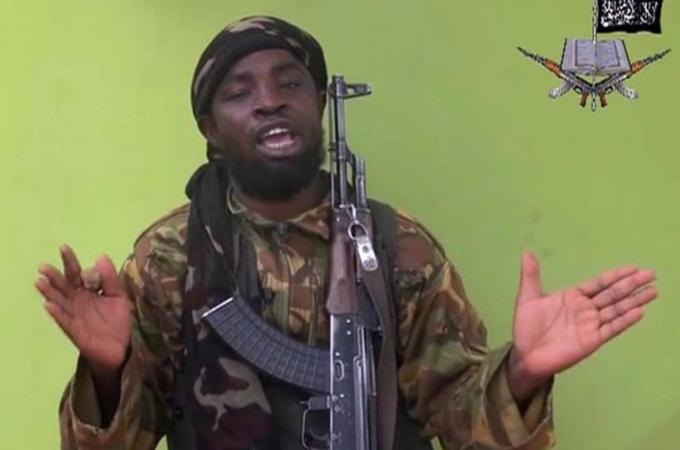
Abu Bakr Shekau gives bayah to Al -Baghdadi (image al Jazeera)

As the world’s media reported on two explosions allegedly carried out at Baga fish market and Monday Market in Maiduguri, Borno, Nigeria, said to be linked to Boko Haram, an announcement was made that the militant group’s leader Abu Bakr Shekau has allegedly given bayah (allegiance) to Abu Bakr al-Baghdadi, Emir of the Islamic State. An 8 minute audio video link was sent to journalists with what appeared to be Shekau’s voice though this could not be independently verified.

Boko Haram refers to the Group of the People of Sunnah for Preaching and Jihad and is an Islamist movement based in northeast Nigeria that has carried out a number of terrorist attacks. The group is also said to be active in Chad, Niger and northern Cameroon and gained worldwide attention when it kidnapped 275 girls from a school in Borno State last April. The ‘Bring Back Our Girls’ campaign was set up in an effort to secure their release and gained much support on social media.

The Maiduguri attacks on Saturday were thought to have been carried out by two female suicide bombers and claimed the lives of 58 people with a further 139 injured. A third explosion hit the Borno Express bus terminal shortly after the other bombings, see Guardian link for details,

http://www.theguardian.com/world/2015/mar/07/boko-haram-suicide-bombers-50-dead-maiduguri

The Independent recently reported that Nigerian minister, Osita Chidoka, a close associate of President Goodluck Jonathan had raised concerns that Boko Haram “will try to copy groups like Isis and al-Shabaab. It can target the West like these groups do, target Europe, Britain – it would want to be like these other groups.” He added,

“the danger is that they can go beyond the region and become international. That is why Nigeria must be supported in what we are trying to do. We need full commitment from the international community.”

Transcript of audio

B_hIGvTU8AAXJYn

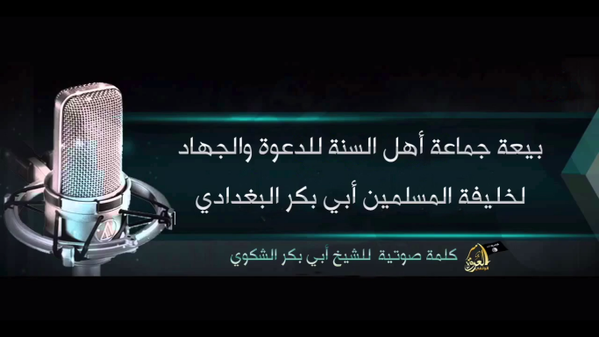
Boko Haram bayah to al Baghdadi (Audio statement with subtitles, still image from video) 

“All praise is due to Allah; we praise Him and seek His help and forgiveness, we seek refuge in Allah Most High from the evils of our own selves and from our wicked deeds. Whoever Allah guides cannot be misguided and whoever he leads astray cannot be guided. I testify that there is no true God worthy of being worshipped except Allah, Alone without partner or associate. I further testify that Mohammad is His slave and Messenger (Peace Be Upon Him)

As to what follows, from your brother in Allah, Abu Mohamed Abu Bin Muhammed Shekau the Imam of Jama’atu Ahlus Sunnah Liddal Awati Wal Jihad to the Caliph of Muslims Abubakar Abu Bakr Ibrahim ibn Awad ibn Ibrahim al -Hosseini al-Qurashi. We are sending you this message following what Allah said in his Quran: and hold fast all of you together, to the rope of Allah, and be not divided among yourselves  and what the Prophet (PBUH) said (Whoever died and he had not Imam, died by death of ignorance). In submission to the order of Allah  “Azza wa Jal” and submission to the order of the Prophet (PBUH) to not separate from each other and stay united as Ummah as Jamaa’ah we announce our allegiance to the Caliph of Muslims Ibrahim Awad ibn Ibrahim al-Husseini al-Qurashi and will heaer and obey in times of difficulty and prosperity, in hardship and ease, and to endure being discriminated against and not to dispute about role with those in power except in case of infidelity regarding at our disposal about which there is evidence, proof from Allah.

We call on Muslims everywhere to pledge allegiance to the Caliph and support him as obedience to Allah and as their application of the absent duty of the era, we pledged allegiance to the Caliph because of the Interest of the Ummah in their religion and in their Dunya is to have an Imam that looks after them according to the Allah’s rule and fights the enemy of Islam and those who fights the rule of Allah and this is the completeness of the religion with the book and the sword that favours Ibn Taymiyaah may Allah have mercy on him said (People must know that having to rule the people is one of the greatest duties of the Religion, even the Religion and the world for Muslims will never be in complete without it, the interest of Sons of Adam won’t be successful without them being united under one Jamaa’ah after their gathering together they must have a head and its not a problem even if the less of the groups who oppose the others unite for this cause to reaffirm the importance of the union of this gathering.

We pledge allegiance because there is no cure of the dissimilarity that Ummah have except the Caliphate, we also call all the Muslims to join us in this goodness because it would enrage the enemy of Allah, by Allah, our gathering under one banner and one Imam is more heavy to the enemy for them than our victory on the battlefield.

Allahu Akbar, Allahu Akbar, Allahu Akbar and to Allah belongs all honour and to his messenger and to the believers but the hypocrites that do not understand, may Allah bless our Prophet Muhammad your brother in Allah Abu Bakr Abu Mohamed Abu Bakr bin Momamed Shekau the Imam of Jamaa’atu Ablus Sunnah Liddal Awati Wal Jihad.”

Audio link

http://sendvid.com/duneog8q

Links 

“Bring Back Our Girls: Michelle Obama and Malala Yousafzai support campaign for return of kidnapped Nigeria schoolgirls”

http://www.independent.co.uk/news/world/africa/nigeria-kidnapped-schoolgirls-michelle-obama-joins-campaign-9336983.html

Carol Anne Grayson is an independent writer/researcher on global health/human rights/WOT and is Executive Producer of the Oscar nominated, Incident in New Baghdad . She is a Registered Mental Nurse with a Masters in Gender Culture and Development. Carol was awarded the ESRC, Michael Young Prize for Research 2009, and the COTT ‘Action = Life’ Human Rights Award’ for “upholding truth and justice”. She is also a survivor of US “collateral damage”.

Posted in Uncategorized | Leave a comment

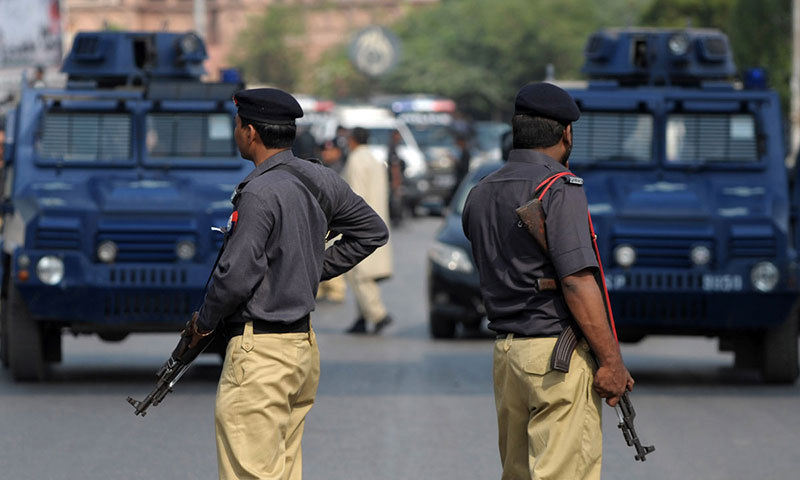
Pakistan police policy “commit crime to fight crime” only incites more terrorism. Where is the accountability?

 54fa63eae7754

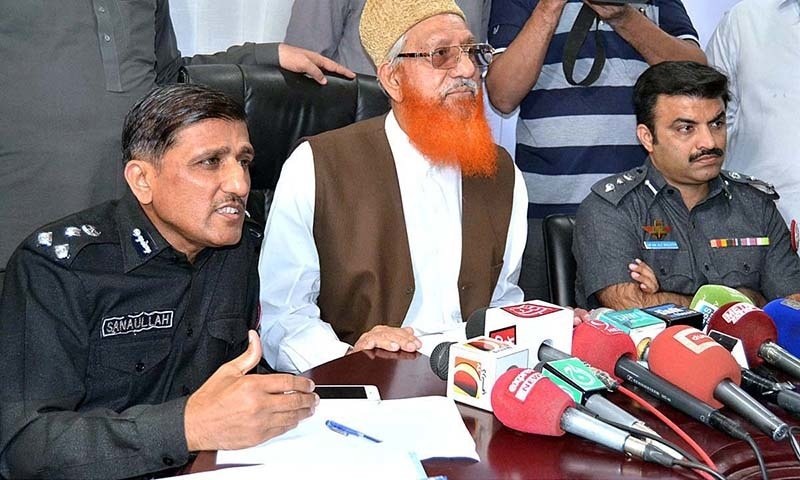
‘Extrajudicial killings cannot be justified but society has come to accept this ‘modus operandi’ to make streets safer.’—Reuters/File (via DAWN)

Pakistan police plunge ever lower in their actions failing by their own admission to lead the way in society through upholding the law. Society begins to break down when there is no respect for authority, where there is moral ambiguity and the feeling that a fair judicial process for both criminals and victims of crime is a “distant dream”.

Today human rights advocates will be dismayed to read that extra-judicial killings by police is widely accepted in Pakistan society ever more openly with many simply turning a blind eye to such aberrations. So what do the police have to say on this…

According to DAWN Media today, reporting from Hyderabad,

DIG Sanaullah Abbasi has said that extrajudicial killings and other actions cannot be justified officially but society has come to accept this ‘modus operandi’ of police to eradicate crimes and make streets safer.

“It is not necessary for an encounter to be seen as genuine only if a policeman loses his life in it. You can see police have restored peace and order in the city (through this modus operandi)…,” he said

At a media briefing last week at the Citizens-Police Liaison Committee (CPLC) on cases of kidnapping and women trafficking, Abbasi appears to be justifying police actions known as ‘half fry’ and ‘full fry’. In a nutshell this means if a person is suspected of committing a crime, the police can shoot a person in the leg “to render them disabled before sending them to jail” and it was confirmed that this had been inflicted upon 73 persons in 3 months… see full article on the following link,

http://www.dawn.com/news/1167845/extrajudicial-acts-by-police-aimed-at-curbing-crime-says-dig

53ba2aacd8be2

Arms should only be used by police in exceptional circumstances not as “punishment”

Police use of firearms is meant only to be used in exceptional circumstances for example where life is being threatened not as a form of extra-judicial punishment prior to a person going to court to determine innocence or guilt. As the system currently stands in Pakistan, a suspect’s case is meant to proceed through a legal process and the punishment is deprivation of freedom (though official execution is covered by law) but not police themselves deciding to physically disable a person leaving them with permanent injury.

The irony is, if Pakistan wishes to adopt an alternative system to the current “democratic” one in place they can always follow Islam and opt for full Sharia as in Saudi Arabia…However if a Sharia system is in operation (which some would argue is a harsher system with penalties such as having a hand removed for theft) a person would still have to go through a Sharia court for proper sentencing before punishment is passed.

Extra-judicial torture and killing by police and the military only incites more violence in society as opposed to making society safer. Another outcome is that when police behave beyond the law the media become afraid to question in case they too become victims of a shooting to shut them up and this fear leads to biased reporting.

Far from a safer society, shooting “untried” persons can incite terrible violence. One of the worst case scenarios of a retaliation attack was the Peshawar Army School massacre carried out by Pakistan Tereek -e-Taliban (TTP) in December 2014 which left many dead. Despite repeated warnings to army and police to stop criminal behaviour of torture and extra- judicial killing in custody BEFORE the incident, authorities continued to allegedly abuse prisoners with bodies piling up in advance of the school attack. Authorities, by their unlawful activities actually colluded to kill the city’s children. Now in another twist of hypocrisy we see authorities naming schools after the deceased children when surely it would have been better to pay heed to warnings and aim to prevent retaliation attacks in the first place.

Don’t the police see when they abandon their morality they only encourage others to do the same and are poor role models for society. They are in fact giving a “green light” for insurgents and others to ignore the law and any Taliban in court only can state they were following police unlawful action of “anything goes” attitude as a defence.

I note also, even in this naming initiative where schools across Pakistan will be called after “martyred” Peshawar school children, there are the usual double standards. When did anyone ever name a school after a child drone victim for example… some “shaheeds” are simply buried and forgotten by the state. Again such hypocrisy is insensitive to other bereaved parents and leads to anger and a feeling of betrayal by authorities! Is it is acceptable to allow and allegedly enable the killing of children by US drone but then resort to outcry when Taliban retaliate.

The problem of lawless police is also a problem for neighbouring Afghanistan as highlighted in two recently released reports, one from UNAMA (a United Nations body) on torture and killing in custody and a second from Human Rights Watch on the criminal actions of warlords, local militia and police see “link” section.

On a last disturbing note as written in DAWN, DIG Abassi states that, Hyderabad and Khairpur had become model districts — thanks to this ‘modus operandi’ (referring to police practice) adding “if this [formula] continues then I can assure you that we will be able to create ideal conditions in crime control.” If Pakistan is happy with these “ideal conditions”and actions of its police and military to allegedly torture and kill suspects then it is very likely more retaliations acts will take place in the future. In that case the authorities must surely accept some accountability for their own actions if their family members are later targeted and shot in return! The message police are giving, is that the law counts for little in Pakistan, police decline to uphold it themselves so insurgents and civilians alike might as well behave as they wish on the streets!

Links

“UNAMA report: The state as an agent of torture, abuse and killing of detainees in Afghan custody.”

https://activist1.wordpress.com/2015/02/25/unama-report-the-state-as-an-agent-of-torture-abuse-and-killing-of-detainees-in-afghan-custody/

“Afghanistan: Human Rights Watch report names warlords, militia as notorious human rights abusers.

https://activist1.wordpress.com/2015/03/04/afghanistan-new-report-from-human-rights-watch-questions-afghan-us-government-support-to-notorious-human-rights-abusers/

Carol Anne Grayson is an independent writer/researcher on global health/human rights/WOT and is Executive Producer of the Oscar nominated, Incident in New Baghdad . She is a Registered Mental Nurse with a Masters in Gender Culture and Development. Carol was awarded the ESRC, Michael Young Prize for Research 2009, and the COTT ‘Action = Life’ Human Rights Award’ for “upholding truth and justice”. She is also a survivor of US “collateral damage”.

Posted in Uncategorized | Leave a comment

Statement of Islamic Emirate regarding the publication of rumours about negotiations

1-flag_1

The media has been publishing false reports periodically over the past week asserting the heating up of negotiations and even fabrications about visits by the delegations of Islamic Emirate.

We reject all such claims. There is no such process taking place and neither can such matters shape up behind closed doors or be kept hidden.

If there was anything taking place in this regard, the Islamic Emirate would have informed the media and its countrymen through its official channels.

The Islamic Emirate is working towards the establishment of a dignified peace as a necessity and aspiration of its countrymen however the main factors fueling this war are the presence of foreign invaders and continued anti-Islam activities. Since Jihad is an individual obligation due to the presence of invaders therefore the Islamic Emirate until now deems the use of weapon as upholding this command.

Since all reports about negotiations are baseless, which seem to be the work of intelligence circles, hence no one should believe them. Such baseless rumors have been circulated many times over the past 13 years but all praise is due to Allah, it has failed in harming the Mujahideen or cultivating distrust. This wave of lies shall also pass by fruitless this time around and time shall prove everything.

As we believe that such rumors are the work of secret agencies with sinister goals therefore the Islamic Emirate of Afghanistan calls on its nation to be vigilant as ever about enemy plots and not be fooled by mere propaganda.

Islamic Emirate of Afghanistan

12/05/1436 Hijri Lunar

12/12/1393 Hijri Solar                    03/03/2015 Gregorian

End

Carol Anne Grayson is an independent writer/researcher on global health/human rights/WOT and is Executive Producer of the Oscar nominated, Incident in New Baghdad. She is a Registered Mental Nurse with a Masters in Gender Culture and Development. Carol was awarded the ESRC, Michael Young Prize for Research 2009, and the COTT ‘Action = Life’ Human Rights Award’ for “upholding truth and justice”. She is also a survivor of US “collateral damage”.

Posted in Uncategorized | Leave a comment

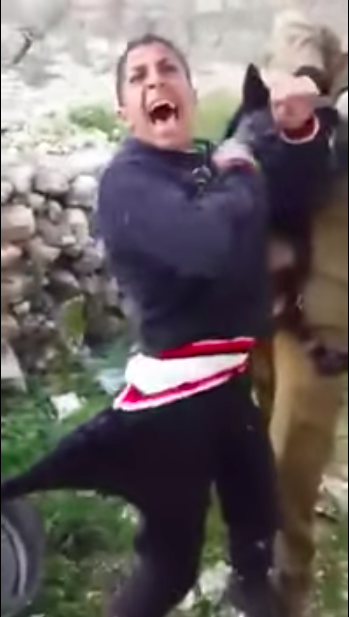
Israel has “gone to the dogs”: Outrage over latest attack on a teenager

Screen-Shot-2015-03-03-at-6.22.21-AM

Israel has “gone to the dogs” in its treatment of children and youth (image, via Mondoweiss)

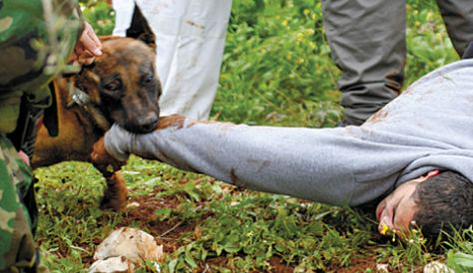
Israel continues to outdo itself in the appalling treatment of children and young persons and has literally “gone to the dogs” attacking a teenager who was alleged to have thrown stones. A video from an incident on 23rd Dec, 2014 was posted by B’Tselem (the Israeli Information Center for Human Rights in the Occupied Territories) and shows 16-year old Hamzeh Abu Hashem crying out in an obvious state of distress as two dogs appear to latch on to his body. The English expression “gone to the dogs” is used to suggest a descent to dissipation and ruin which could well be applied to the reputation of the Israeli soldiers involved in this incident. As far back as the 1500s, bad or stale food that was not thought to be suitable for human consumption was thrown to the dogs. The expression caught on and expanded to include any person or thing that came to a bad end, was ruined, or looked terrible. A fitting description for those with little respect for the rights of young people.

International Middle East Media Centre (IMEMC) gave the following account of the incident,

“In the video leaked by Michael Ben-Ari on his Facebook page, two Israeli soldiers are holding onto a 16-year old boy, and forcing a dog to bite the child while commanding the dog ‘Bite him!’ and saying to the boy, ‘Who’s the coward now?’ in Hebrew.

The incident in question has been identified as a December 23rd 2014 attack by Israeli soldiers who captured the child in a ‘buffer zone’ between Beit Ummar, a town located near Hebron in the southern part of the West Bank, and a nearby Israeli settlement built on land stolen from the Palestinian residents of Beit Ummar.

Before it was removed, the video was copied and spread around the internet. In response, the Israeli military issued a statement saying that the incident was ‘irregular’ and ‘would be investigated’

See full story and videos of incident on the following link,

Israeli Politician Leaks Classified Army Video Showing Soldiers Using Dogs to Attack Palestinian Boy

Israel have been using dogs in the military for a number of years. According to information provided in A Special Presentation From Hahn’s 50th AP K-9, West Germany on “K-9 History: World’s Military Working Dogs” Jesusalem’s Police Dept have in the past purchased a number of dogs “from private resources in the U.S.A., who also trained their K-9 handlers, these are used for crowd control.” They also state that, “within the military, the exact number of dogs is classified, the Army, Air Force and Navy, all have K-9 Units.”

B’Tselem claim they have documented their concern regarding Israeli military use of dogs as weapons against unarmed Palestinian civilians. They have also written to the Military Advocate General demanding an end to dog attacks, however, “the only response, received more than 18 months ago, was that the letter was received and is under review.”

Response to dog attack on Twitter

Voice from Palestine tweeted,

“This is Israel! Israelis celebrate the shameful attack of Israeli dogs on Palestinian boy”

Ruchi Gupta said,

“Revolted by the story of Israeli soldiers using attack dogs against Palestinian boy. Human rights violations inevitable outcome of occupation”

David Harris-Gershon stated,

“in Ferguson & Palestine, dogs have shockingly been used on unarmed Palestinians and African-Americans”

 B_TWsIKUQAAGZug

A Palestinian protester attacked by an IDF dog during a protest in the West Bank, 2012. Photo by Lazar Simeonov (via Haaretz)

Emanuel Gross writing in Haaretz stated, “a society without respect for human dignity, that is willing to use animals against human beings, is an unfit society that is losing its compass and its conscience.” Israel’s chief military prosecutor has now ordered an investigation into the alleged assault which was also condemned by the Palestinian Ministry of Foreign Affairs. Considering the ructions caused by this latest dog attack, Israel would be wise to reconsider its use of dogs confining their activities to positive work such as “search and rescue” to assist humans not savage them, and as sniffer dogs in bomb disposal.

Carol Anne Grayson is an independent writer/researcher on global health/human rights/WOT and is Executive Producer of the Oscar nominated, Incident in New Baghdad . She is a Registered Mental Nurse with a Masters in Gender Culture and Development. Carol was awarded the ESRC, Michael Young Prize for Research 2009, and the COTT ‘Action = Life’ Human Rights Award’ for “upholding truth and justice”. She is also a survivor of US “collateral damage”.

Posted in Uncategorized | Leave a comment

Bloody Balochistan: Dumped body of another “intellectual” incites further calls from activists for “independence”

B_UBxhKUQAEPiCf

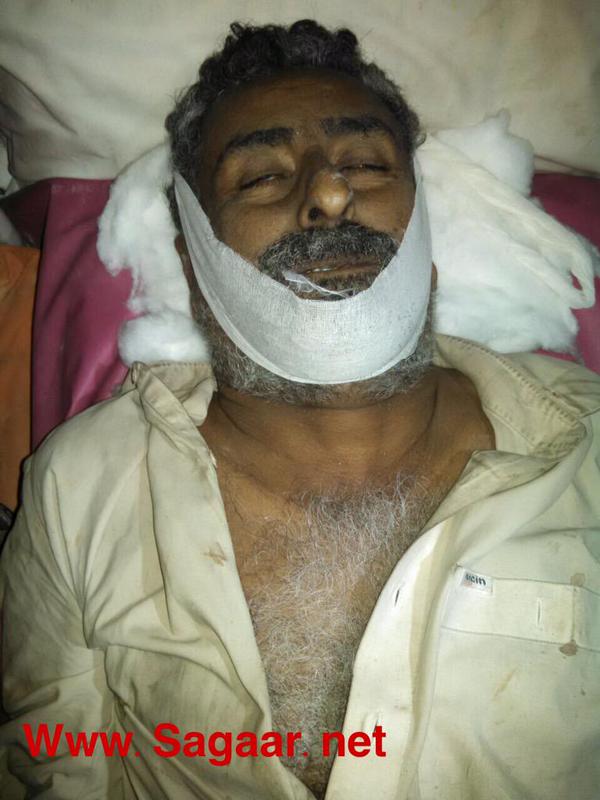
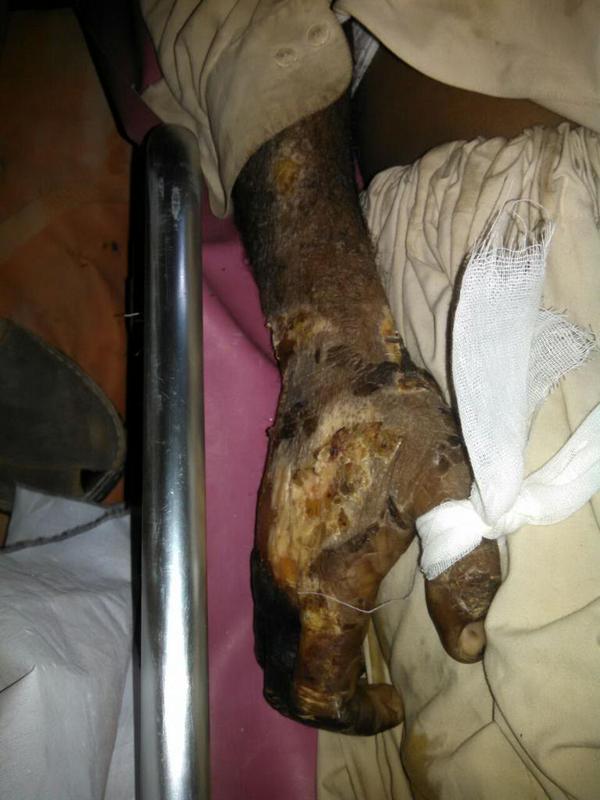
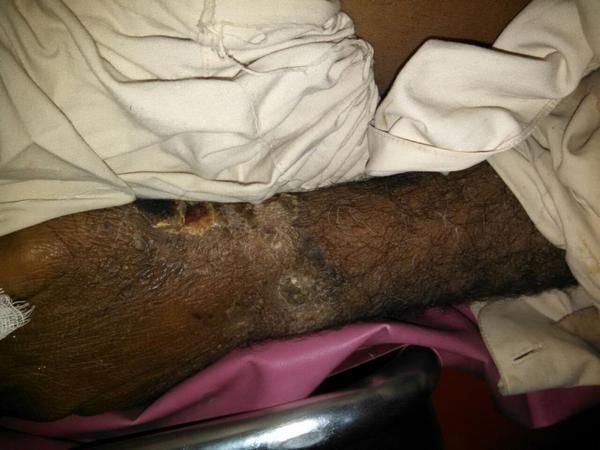
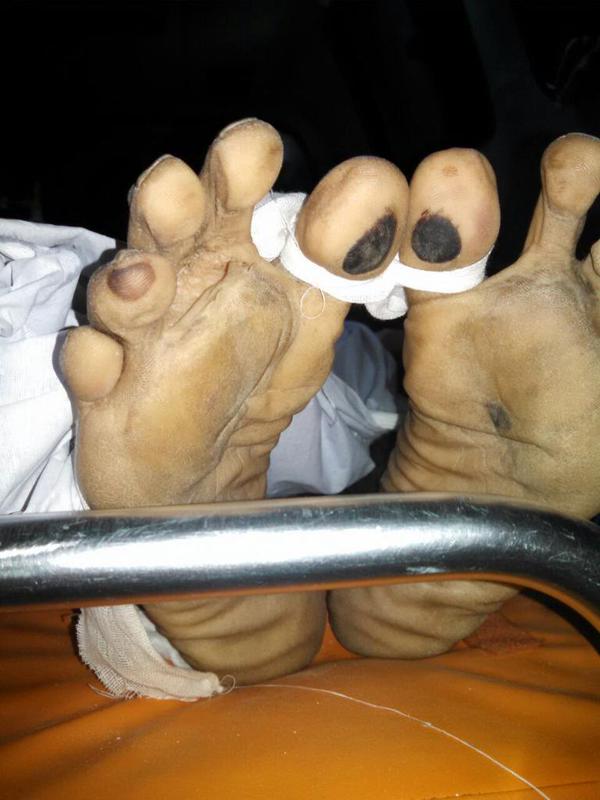
Khuda Bakhsh, another alleged victim of “kidnap, dump and kill” Balochistan

“Kidnap, torture, kill” shows no signs of abating in Pakistan. Those living in Balochistan live in fear and have to face the horror of dead bodies on a daily basis. As activists explain, this only increases calls for “independence” as the state is failing to protect many ordinary civilians.

Khuda Bakhsh was allegedly abducted by the Pakistan army in February and his dead body was discovered yesterday (4th March) showing signs of torture. Police were informed to take one dead body from Khuzdar Army Cantonment, the body was that of Khuda Bakhsh. Talaar Baloch who informed me of the killing said,

“he was a notable school teacher, Pakistan is killing the Baloch intellectuals, he is not the first and may not be the last. It is a process and stage of Genocide which Pakistan aims to. Bangladeshi history is being repeated here.We are against torture and terrorism. Peaceful Baloch are abducted, killed and dumped by Pakistan. The silence of human rights organizations and UN (United Nations) has given free hand to Pakistan. Lets find an end to injustices. Lets liberate ourselves from Pakistan. The only solution is to reinstate the free status of Balochistan.” 

Baloch leaders are involved in a long campaign to gain independence from what they view as Pakistan’s “tyrannical rule” and want the immediate withdrawal of Pakistani troops from the country’s largest province. Business Standard highlighted an appeal which was made on August 11th, 2024 (Balochistan Indepencence Day). Activists aimed to draw attention to the “oppressive policies” which locals have experienced since Pakistan annexed Balochistan following partition of India in 1947. The following extracts state,

“the Pakistani armed forces have launched ethnic cleansing and genocide in Balochistan and are systematically kidnapping, imprisoning and murdering Baloch political activists, students, lawyers, intellectuals and nationalist leaders”

“Pakistan’s security forces are engaging in an abusive free-for-all in Balochistan as Baloch nationalists ‘disappear’ and in many cases are extra-judicially executed”

More photos of Khuda Bakhsh

B_U1HXyXAAEYrOC

B_U1G1RW8AIcYoc

B_U1H7zWwAAyHtV


Images of Kudu Bakhsh showing “signs of torture” via Talaar Baloch

Amina Masood Janjua of Defense of Human Rights (DHR) Pakistan stated, “its so unfortunate and painful, justice has become a dream in Pakistán now.” Enforced disappearances do occur all over Pakistan. Amina’s own husband Masood a well known educator and businessman of Rawalpindi and Islamabad disappeared along with a friend Faisal Faraz, an engineer, whilst on a bus journey from Rawalpindi to Peshawar on 3rd July, 2005. Amina is now working hard to draw international attention to Masood’s case on the 10th anniversary year of his disappearance. Amina’s story can be read in the “links” section on her website.

B_VL18yUMAAEt4p

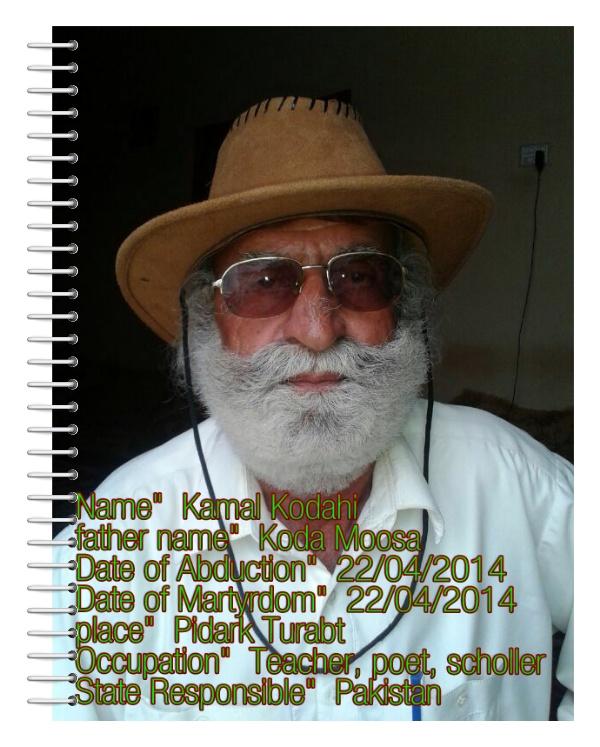
Kamal Kohdahl, another teacher allegedly abducted by state agencies on 22nd April, 2014, found dead on same day (image via Sher-e-Baloch)

Twitter followers were keen to express their reactions to Khuda Bakhsh killing,

ymBaloch tweeted the following,

“cultural genocide is the main aim, intellectuals are the vanguards of modernism and social development hence targeted”

“same tactic was used in Bangladesh, when you kill an intellectual, civilization suffers for generations”

“intellectuals are the senses of a nation, Pakistani army wants to turn Baloch nation blind and dump”

Sher-e-Baloch added,

“they know they are real face of Pakistan. Educators are being killed two months before they killed Zahid hussain in Gwader.”

Analyst’s Twist commented,

“its a double edge sword. Napak army was left with tumours by the British, and its trained by them and US.”

Links

“Balochistan: The untold story of Pakistan’s other war”

http://www.bbc.co.uk/news/world-asia-26272897

“Defence of Human Rights” website

http://www.dhrpk.org/

Carol Anne Grayson is an independent writer/researcher on global health/human rights/WOT and is Executive Producer of the Oscar nominated, Incident in New Baghdad . She is a Registered Mental Nurse with a Masters in Gender Culture and Development. Carol was awarded the ESRC, Michael Young Prize for Research 2009, and the COTT ‘Action = Life’ Human Rights Award’ for “upholding truth and justice”. She is also a survivor of US “collateral damage”.

Posted in Uncategorized | Leave a comment

Britain’s brutal past: Justice for Mau Mau long overdue, 40,000 still waiting

article-2336418-0B7D864000000578-402_634x476

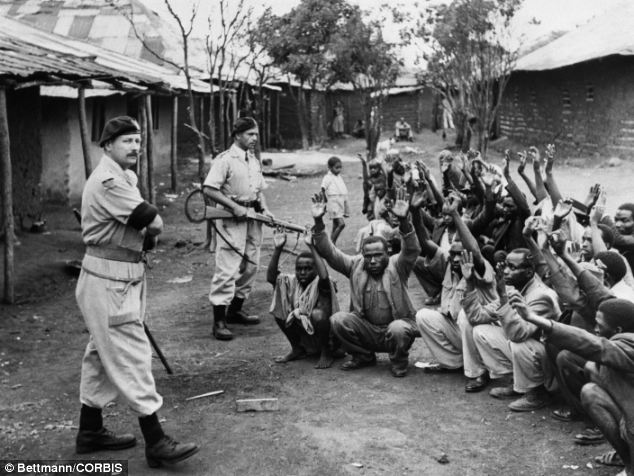
Uprising: British police Guarding Mau Mau suspects in Kariobangi, Kenya (image Bettman/Corbis)

A chance encounter with a Kenyan asylum seeker at a human rights conference provided me with a history lesson more valuable than many I had learned at school. George Mwangi was fighting his legal case to remain in the UK after being tortured in his own country and we were both actively campaigning to highlight the physical and psychological abuse of asylum seekers within UK detention centres through an organisation called Barbed Wire Britain. During our many conversations he used to joke that I reminded him of his grandmother in my determination to fight for justice. He explained that she was a Mau Mau (militant African nationalist movement that originated in the 1950s among the Kikuyu people of Kenya) that were detained by the British during colonial rule.

I had vaguely heard of the Mau Mau, a name I knew was associated with some fear and trepidation by an older generation of Britons but was eager to learn more. Fred Majdalany’s history, State of Emergency, The Full Story of Mau Mau, claims that the name originates from an anagram of Uma Uma (which means “get out, get out”) and was a military codeword based on a secret language-game Kikuyu boys used to play at the time of their circumcision. He states also that to the British it was simply a term given to the ethic group of Kikuyu’s without specific definition.

Over time my friend related stories of the pain and suffering of the grandmother that he loved and admired so much during her incarceration at the hands of the British. In order to help me understand the level of oppression and the importance of “throwing off the colonial burdon” George introduced me to the work of Kenyan writer, Ngugi wa Thiong, author of Decolonising The Mind. The book explained the relevance of exploring the reasoning behind reverting from writing in English (the language of the colonizer) to a return to the language of Kikuyu (or Gikuyu as it is sometimes called). To further advance my education he also presented me with the works of Professor Caroline Elkin, Imperial Reckoning along with Britain’s Gulag: The Brutal End of Empire in Kenya and I was faced once again with the fact that the history lessons I had learnt at school often either omitted some key periods entirely or provided pupils with only a sanitized version of events.

Elkin herself states, “when I presented my dissertation proposal to my department in the winter of 1997, I was intending to write a history of the success of Britain’s civilising mission in the detention camps of Kenya” what she discovered however was that there were mystifying gaps in records that had otherwise been meticulously kept which aroused her curiosity. Documents detailing actions of the British had been flown out of Kenya on the eve of Independence some of which are still labelled as “classified” 50 years after the war with Mau Mau. This prompted Elkin to delve deeper on a fact finding mission and her journey of discovery can be followed in a YouTube lecture…Colonial War Crimes in Kenya http://www.youtube.com/watch?v=G5AdhsXN-uo

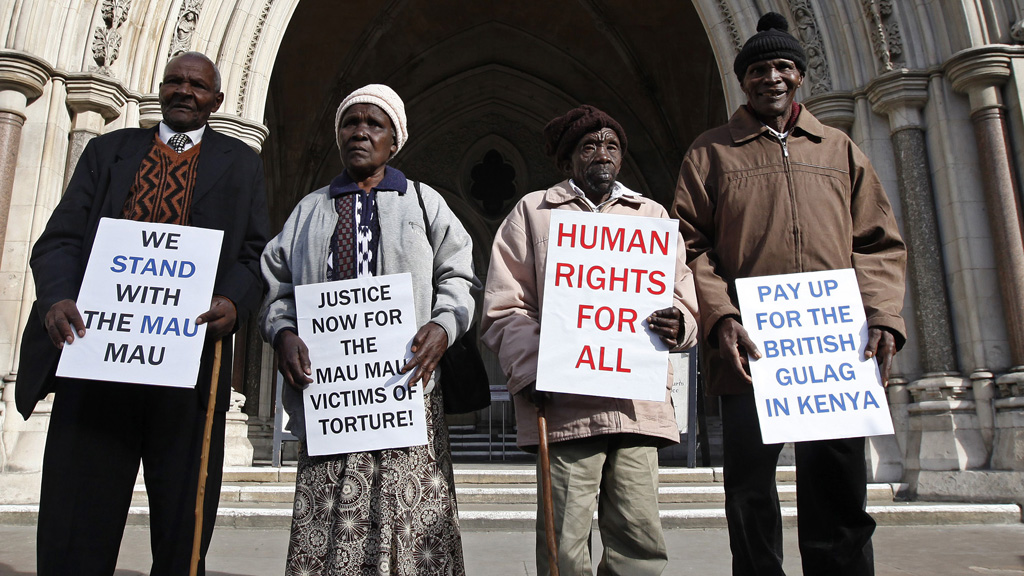
In recent years, four Kenyans that were allegedly been tortured took legal cases against the British for their treatment during the Mau Mau uprising and one of the Empire’s bloodiest conflicts. It opened doors that had been shut for decades. Russia Today reported that “in 2010, UK legal firm Leigh Day successfully sued the British government on behalf of Kenyans who rebelled against UK colonial rule in the 1950s. The UK government paid £19.9m to 5,228 Kenyans in 2013 who were reportedly tortured by Britain’s colonial administration during the revolt.” However another 40,000 cases are currently being filed in a second wave of litigation that will include seeking justice for alleged forced removal, detention, systematic torture and serious sexual assault.

Since 1945, nationalist Jomo Kenyatta of the Kenyan African Union had challenged the British over the redistribution of land to white settlers which had left many Kenyans economically marginalised within their own country. Mau Mau swore an oath of allegiance to resist this oppression and took action by raiding farms, killing livestock and also through political opposition. The response by the British was to introduce a state of emergency in 1952 and thus began a brutal clampdown using systematic violence that included “search and destroy” missions and those suspected of insurgency were often detained for years without trial. The BBC reports Martin Day (human rights lawyer for the Mau Mau) as saying, “they were put in camps, where they were subject to severe torture, malnutrition and beatings. The women were sexually assaulted, two of the men were castrated, the most brutal torture you could imagine.” The British also used the African Home Guard which included African troops from Uganda and Tanganyika to quash rebellions in feared night time raids on Kikuyu villages.

Nyingi, Muthoni, Nzili and Mutua stand outside the High Court in London

Campaigners for Mau Mau (Channel 4)

The Daily Mail highlights several cases, one of those is Wambugu Wa Niyingi who claims to have been suspended by his feet from a hut roof, “he was then subjected to a severe beating over 30 minutes, while cold water was poured on his face and into his mouth so he could not breathe.” One woman alleges sexual assault with bottles filled with hot water and others are suing for compensation for castration. The paper also claim’s President Obama’s grandfather was among those abused. It is alleged he was detained for two years in 1949, regularly whipped and that according to his third wife Sarah Onyango, “white jailors would squeeze his testicles with parallel metallic rods and pierce his nails and buttocks with pins.”

Further cases of horrific brutality were detailed in the Independent as follows,

“A woman, now 76, who details how, as a 14-year-old girl she and her family were brutalised during a raid by colonial police before two white soldiers forced her to have sex with her own father while they looked on.

A man, now aged 79, who describes how he was placed above a metal drum of burning charcoal, known as the “hat of death”, and beaten until he defecated over himself, before then being beaten unconscious with a hammer.

Another man, now 83, who suffered regular torture including a punishment which involved being made to dig a hole with his index finger by constantly turning his crouched body in a circle, causing dizziness punished by further beatings.”

There was violence on both sides of the conflict however in terms of figures there were 1090 Mau Mau hanged by the British compared to the killings of 30 white settlers during the 8 years of emergency and at least 11,000 Mau Mau were killed during counter-insurgency operations through the true figure may well be far higher.

The British government in its efforts to avoid the possibility of high compensation bills for a long time denied any culpability arguing that it is the Kenyan government that must shoulder responsibility since liability was handed over with Independence. Through my own personal experience of my husband litigating against the British government (haemophilia contaminated blood cases which included human rights abuses and complicity in torture through unethical experimentation), I know only too well the level to which the British government will go to hide wrongdoing and that destroying documents, hiding evidence, lying and failing to accept responsibility for harm and death is common to this very day. It is my hope that ALL the cases of Kenyans who suffered so terribly during Colonial rule will find justice through British courts. However I fear that like us they will face government resistance, time limits and years of delays through a flawed legal system. In the event of strong evidence to support their case they will likely be met with the offer of a pathetic “out of court” settlement (with a possible “silence” clause) which will not reflect their level of distress, loss and continued suffering. I hope I am proven wrong.

For years now Brits have witnessed the hypocrisy of western “democracy”…that we live in a society where government criticises the human rights of other countries whilst violating the human rights of its own citizens…a society where greed is often placed before ethics and morality and exploitation of others continues to be firmly entrenched in our foreign policy. Justice is not only about compensation, what many victims of injustice seek most of all is to be believed, the truth to be told, apologies to be given and for systems to change.

Foreign Secretary, William Hague, expressed regret for the first time on 6th June 2013 in the House of Commons, that thousands of Kenyans had been subjected to torture and other forms of ill-treatment at the hands of the British colonial administration during the Kenya Emergency of the 1950’s. However, there are still 40,000 people whose cases have still to be heard, they are old now and time is not on their side.

My own feeling is that although Britain gave up its colonies, successive British governments have retained something of a colonial mentality and former colonies have not entirely released their own minds from enslavement. In other words the abuse continues. There are lessons still to be learnt from the Kenyan experience, British oppression continued years later through the occupation of Iraq and Afghanistan. The subject of abuse by the state has not gone away, allegations remain regarding the outsourcing of torture and the treatment of those caught up in the so called “war on terror”.

Britain still hangs on to the remnants of imperial thinking and is not hearing foreign voices  that are saying, they don’t want loans and handouts, stop arming dictators…that they want to develop their own system of government with people of their choosing and stand on their own two feet. Government needs to examine British foreign policy and concerns raised regarding the alleged role of our security services in radicalizing young people at home and further afield. We have MI6 chief, Sir John Sawers (who has recently stepped down) acting like an apologist, stating that torturing terror suspects produces “useful information.” The definition of “who is a terrorist can be very misleading” and innocents get caught up in government clampdowns. If we reflect back, many Kenyans were treated as inferior, often wrongly labelled as terrorists, placed in gulags and tortured… we need to learn lessons from the past.

_69868542_661d440d-6f32-4539-a832-6693e69bbb7c

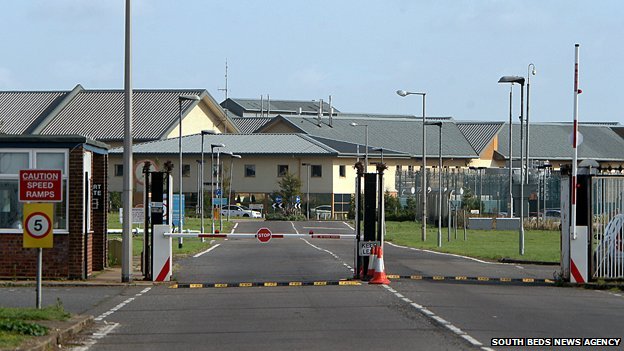
Modern day detention in Yarls Wood, UK but with some old colonial attitudes to detainees (image South Beds News Agency)

I feel it is fitting to end this article with reference to a letter sent from the grandson of a Mau Mau, my old campaigning friend George http://www.aworldtowin.net/frontline/asylumseekeropenletter.html  In a sense he summed up many of the failings of Britain (which continue today) in an open letter he addressed to Tony Blair in 2007 Your British Values Are Alien To Our Human Values. This time the protest was not about detention by the British in Kenya but detention and abuse suffered within UK detention centres of a not so “Great” Britain! This week our country is once again shamed by allegations on Channel Four regarding treatment of asylum seekers particularly women in Yarls Wood and alleged abuse. Sad to say the racist language, white supremacist attitude and degrading of detainees appeared horribly reminiscent of colonialist behaviour in the detention camps of 1950s Kenya…and made me think of George’s grandmother, not a good advert for modern day Britain!

Links

40,000 Kenyans accuse Britain of abuse in second Mau Mau law suit

http://rt.com/uk/200487-kenyans-sue-uk-government/

Mau Mau uprising: Kenyans still waiting for justice join class action over Britain’s role in the emergency

http://www.independent.co.uk/news/world/africa/mau-mau-uprising-kenyans-still-waiting-for-justice-join-class-action-over-britains-role-in-the-emergency-9877808.html


Carol Anne Grayson is an independent writer/researcher on global health/human rights/WOT and is Executive Producer of the Oscar nominated, Incident in New Baghdad . She is a Registered Mental Nurse with a Masters in Gender Culture and Development. Carol was awarded the ESRC, Michael Young Prize for Research 2009, and the COTT ‘Action = Life’ Human Rights Award’ for “upholding truth and justice”. She is also a survivor of US “collateral damage”.

Posted in Uncategorized | Leave a comment

Afghanistan: HRW report names warlords, militia as “notorious human rights abusers” and questions support they receive from Afghan, US governments

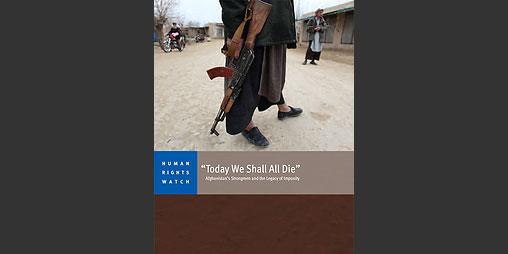
B_MpXjxW8AEhiBJ

Human Rights Watch has released an important new report on Afghanistan entitled, “Today We Shall All Die: Afghanistan’s Strongmen and the Legacy of Impunity.” The 96 page document details the profiles of eight “strongmen” linked to police, intelligence, and militia forces responsible for serious abuses in recent years. (This particular report excludes any alleged human rights abuses by the Taliban which can be found in other HRW publications.) HRW explores institutionalized violence and highlights the fact that victims of human rights violations have been unable to obtain justice with a reluctance to hold key figures to account. This brings into question the role of the Afghan government and the US that has helped train and develop organizations carrying out extreme brutality throughout Afghanistan. These include the Afghan National Police units, National Directorate of Security officials, and Afghan Local Police forces.

Extract from report,

“This report is about some of the people who carry out serious human rights violations yet enjoy impunity. The accounts in this report include allegations of mass killings, murder, rape, torture, beatings, enforced disappearances, theft, and arbitrary detention. The perpetrators of these abuses are persons in positions of authority or persons who operate with their backing. We have chosen examples that illustrate that they occupy positions in almost every level of government, from local militia commanders to ministerial rank; victims and perpetrators come from each of the major ethnic communities in Afghanistan. While the perpetrators are not representative of the Afghan security forces as a whole, their actions have an impact in Afghanistan that extends beyond the immediate victims, as they degrade the commitments to human rights, justice, and the rule of law that Afghanistan has made in its constitution and international treaties.”

“Profiles of Impunity” covered in the report are named below,

Abdul Hakim Shujoyi

Khair Mohammad Timur (“Cherik”)

Commander Azizullah

Atta Mohammad Noor

Haji Najibullah Kapisa

Mir Alam

Asadullah Khalid

Abdul Razik

The report follows closely on the heels of the United Nations Assistance Mission in Afghanistan (UNAMA) report, Update on the Treatment of Conflict-Related Detainees in Afghan Custody: Accountability and Implementation of Presidential Decree 129″. This publication explored cases of torture and degrading treatment of those in custody. UNAMA identified that 790 detainees were interviewed from February 2013 to December 2014 with 35% indicating torture or ill-treatment during incarceration, some 278 cases, this included 105 children of whom 44 were said to have experienced ill-treatment. This report can be found on the following link,

https://activist1.wordpress.com/2015/02/25/unama-report-the-state-as-an-agent-of-torture-abuse-and-killing-of-detainees-in-afghan-custody/

Press Release from HRW on new report,

Afghanistan Abusive Strongmen Escape Justice

Donors Should Press New Government on Prosecutions

March 3rd, 2015

(Washington, DC) – Afghanistan’s new government should prosecute officials and commanders whose serious human rights abuses have long gone unpunished, Human Rights Watch said in a report released today. US officials should press President Ashraf Ghani to take up justice for past abuses as a top priority during Ghani’s expected March 2015 visit to Washington, DC.

“The previous Afghan government and the United States enabled powerful and abusive individuals and their forces to commit atrocities for too long without being held to account,” said Phelim Kine, deputy Asia director. “The Ghani administration has already taken the welcome step of launching a national action plan to eliminate torture. The United States, which helped install numerous warlords and strongmen after the overthrow of the Taliban, should now lead an international effort to support the new government to remove serious human rights abusers from their ranks.”

The 96-page report, “‘Today We Shall All Die’: Afghanistan’s Strongmen and the Legacy of Impunity,” profiles eight “strongmen” linked to police, intelligence, and militia forces responsible for serious abuses in recent years. The report documents emblematic incidents that reflect longstanding patterns of violence for which victims obtained no official redress. The impunity enjoyed by powerful figures raises serious concerns about Afghan government and international efforts to arm, train, vet, and hold accountable Afghan National Police units, National Directorate of Security officials, and Afghan Local Police forces.

The government of former president Hamid Karzai failed to bring these individuals and their forces to justice, fostering further abuses and fueling local grievances that have generated support for the Taliban and other anti-government forces. Ghani has pledged to hold security forces accountable for their actions and end official tolerance for torture, but will need the full support of Afghanistan’s international supporters to carry out this politically sensitive task.

The report is based on 125 interviews Human Rights Watch carried out since August 2012 with victims of abuse and their family members, as well as witnesses, government officials, community elders, journalists, rights activists, United Nations officials, and members of Afghan and international security forces. It does not look at abuses by the Taliban and other opposition forces, which Human Rights Watch has addressed in other contexts.

A resident of Kunduz province whose father was murdered by a local militia in 2012 told Human Rights Watch, “I went on the roof of the house and saw we were surrounded by armed men…. My father was sitting there and said: ‘Say your whole kalima [the Muslim profession of faith], because I think today we shall all die.’”

Officials and commanders whose forces have a history of abuses typically go unpunished. For instance, forces under the command of Hakim Shujoyi have killed dozens of civilians in Uruzgan province, yet despite a warrant for his arrest he remains at large and evidence suggests he has enjoyed the support of US forces. In Paktika province, Afghan Local Police forces under the command of Azizullah,an ethnic Tajik who, as of June 2014, was a commander of the local ALP in Urgun district, have committed multiple kidnappings and killings. Azizullah has worked closely with US Special Forces despite their awareness of his reputation for unlawful brutality.

The provincial chief of police in Kandahar, Brig. Gen. Abdul Raziq, has been directly implicated in ordering extrajudicial executions. And when the former head of the National Directorate of Security Asadullah Khalid sought medical care in the United States, he received a personal visit from President Barack Obama, sending a powerful message of US support for a notorious human rights violator.

“Since the defeat of the Taliban government in late 2001, Afghanistan has made limited progress in developing institutions, such as professional law enforcement and courts, that are crucial for the protection of human rights,” Kine said. “Afghanistan’s international allies have exacerbated the problem by prioritizing short-term alliances with bad actors over long-term reforms. It’s time for this pathology to end.”

Human Rights Watch urged the Afghan government to investigate all allegations of abuse by Afghan security forces, and remove from office and appropriately prosecute officials and commanders implicated in serious abuses. The Ministry of Interior should disband irregular armed groups and hold them accountable for abuses they have committed.

The United States and other major donors to the Afghan security forces should link continued funding to improved accountability, including prosecutions for killings, enforced disappearances, and torture. Donors should ensure that direct assistance to Afghan security forces is benchmarked to improvements in justice mechanisms. The US should fully implement the Leahy Law, which prohibits the provision of military assistance to any unit of foreign security forces where there is credible evidence that the unit has committed gross violations of human rights and that no “effective measures” are being taken to bring those responsible to justice.

“The Afghan government and its supporters should recognize that insecurity comes not only from the insurgency, but from corrupt and unaccountable forces having official backing,” Kine said.  “Kabul and its foreign supporters need to end their toxic codependency on strongmen to give Afghanistan reasonable hope of a viable, rights-respecting strategy for the country’s development.”

Full report can be read on link below,

Today We Shall All Die: Afghanistan’s Strongmen and the Legacy of Impunity

Click to access afghanistan0315web_0.pdf

Both the HRW report and the UNAMA report paint a disturbing picture of current human rights violations in Afghanistan. The Islamic Emirate (Afghan Taliban) have for years produced their own reports drawing attention to the abusive actions of key institutions and documented civilian victims in monthly reports. HRW findings illustrate the danger of automatically rejecting Taliban claims as “propaganda” which some individuals and groups have chosen to do, thus colluding with the perpetrators. In addition, media often appear reluctant to “name and shame” those warlords and militias that are current stakeholders in Afghan society wielding power through punishment, this bias must stop.

HRW have raised serious questions and concerns regarding the relationship between Afghan and US governments to named individuals and institutions in the report and to what level they have helped support and sustain these abusive entities. It is essential that international pressure is put on governments to ensure appropriate action will be taken to bring those responsible to account and deliver justice to victims and their families.

Carol Anne Grayson is an independent writer/researcher on global health/human rights/WOT and is Executive Producer of the Oscar nominated, Incident in New Baghdad . She is a Registered Mental Nurse with a Masters in Gender Culture and Development. Carol was awarded the ESRC, Michael Young Prize for Research 2009, and the COTT ‘Action = Life’ Human Rights Award’ for “upholding truth and justice”. She is also a survivor of US “collateral damage”.

Posted in Uncategorized | Leave a comment

Yarls Wood: Channel 4 report shows little has changed since 2007 Barbed Wire Britain report on abuse in UK detention centres

_69868542_661d440d-6f32-4539-a832-6693e69bbb7c

Yarls Wood (image South Beds News Agency)

Introduction

Back in August 2007, I wrote a short report on “Abuse of Asylum seekers in UK detention Centres” as a volunteer with a group named “Barbed Wire Britain”. I was shocked at what I was hearing and aimed to document several cases to draw attention to the plight of those in centres such as Yarls Wood, Colnbrook, Campsfield and Dungavel.

Unfortunately I had no financial resources so was limited as to what I could achieve as there was no funding to travel around the country to visit those in detention. I was reliant on a committed network of like-minded volunteers including some former detainees to get the word out that I was collecting information and evidence and upon letters received from those in detention to share their experiences though they were very fearful of speaking out.

Detailed reports from lawyers such as Gareth Peirce and charity, Medical Justice were able to explore this issue in much greater detail. The Barbed Wire Britain report was however submitted to the Independent Asylum Commission in 2007. Sadly it seems little has changed, the horrific abuse continues.

Yarls_Wood_15J

Protesters outside Yarls Wood angry at alleged abuse of women (image Refusing to kill)

Tonight Monday 2nd March, Channel Four News will screen a report regarding its own investigation into Yarls Wood Detention Centre. An article which went out from Channel 4 on Sunday 1st March stated the following,

“The treatment of detainees inside the notorious Yarl’s Wood immigration removal centre is revealed in exclusive footage obtained by a Channel 4 News investigation.

The Channel 4 News investigation reveals:

    Numerous incidents of self-harm
    Questions over standards of healthcare
    Guards showing contempt for detainees

Yarl’s Wood, which holds nearly 400 detainees, is the UK’s most secretive immigration detention centre. It has been plagued by damning accusations about the behaviour of guards since it opened in 2001.

Cameras have never been allowed inside. Even the United Nations special rapporteur for violence against women was barred entry.

    Headbutt the b***h. I’d beat her up. Yarl’s Wood staff

But on Monday evening Channel 4 News will reveal footage shot undercover inside the facility over a period of months.” 

See full article here, on a link provided via Medical Justice, an organization that provides medical services, support and training to assist asylum seekers in the UK.

http://www.channel4.com/news/yarls-wood-immigration-removal-detention-centre-investigation

Medical Justice also highlighted the following article by Tom Harper Home Affairs Correspondent in the Sunday Times also published on 1 March 2015,

“AN UNDERCOVER investigation has revealed a culture of racism, sexism and threats of violence in Britain’s most notorious detention centre.

Footage recorded in Yarl’s Wood immigration removal centre reveals that desperate prisoners threw themselves down a staircase in apparent attempts to commit suicide.

In one of the most shocking incidents uncovered by the investigation by Channel 4 News, a bleeding woman suffering a miscarriage had to wait three hours after begging guards to let her see a doctor.

Staff said she was “refusing to wait her turn” and admonished her for ringing an ambulance herself.

Guards were filmed describing various detainees as “black bitch”, “evil”, and one warder even threatened to “get a stick and beat them”.

Yarl’s Wood is operated by Serco, a private company paid hundreds of millions of pounds of taxpayers’ money.”

Full article can be seen on Sunday Times link,

http://www.thesundaytimes.co.uk/sto/news/uk_news/National/article1525358.ece?CMP=OTH-gnws-standard-2015_03_01

I have also decided to put my 2007 report online again so people can check back to what was happening at that time and compare to the situation today, cases 9 and 10 refer to Yarlswood!

REPORT ON ABUSE OF ASYLUM SEEKERS IN UK DETENTION CENTRES

PAPER SUBMITTED TO THE INDEPENDENT ASYLUM COMMISSION

ON BEHALF OF BARBED WIRE BRITAIN-  AUGUST 2007
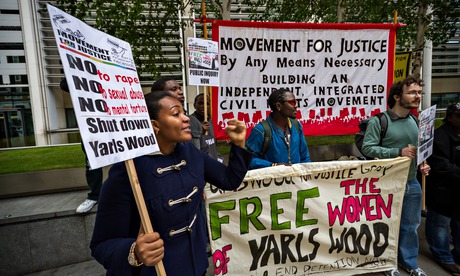
Protesters

Abuse continues at Yarls Wood despite earlier reports warning of the dangers (image Guardian)

Detention: A Culture Of Abuse

Barbed Wire Britain Network to end Refugee and Migrant Detention (BWB) is an organisation run by volunteers that calls for an immediate end to the inhumane UK government policy of detaining asylum seekers. Those detained are often held for long periods against their will, deprived of information on their human rights, and treated as though convicted criminals within a system that is inherently racist. Many detainees exist in fear trapped in immigration prisons that promote a culture of bullying and intimidation with little opportunity for legal redress.

In 2005 Amnesty International published a report criticising government policy on detaining asylum seekers. UK Director Kate Allen stated that “Seeking asylum is not a crime, it is a right. Thousands of people who have done nothing wrong are being locked up in the UK. We found that in many cases there was no apparent reason to detain people” (Refugee Council, 2005).

The BWB committee includes a number of former detainees that have been “processed” through the detention system and we utilize the wealth of experience shared by those who have suffered under this draconian regime. Steel et al (in Wilson and Drozdek, 2004, p. 659) note that post 9/11 “increasingly a number of Western democratic countries appear to be turning away from their commitment to universal humanitarian principles.” One area where BWB would argue that this has become most marked is in relation to the harsh legislation applied to maintain the subjugation of asylum seekers.

In addition to the general clampdown regarding the basic human rights of refugees and asylum seekers BWB committee members have received information over the past few months on a number of cases of abuse of detainees. Incidents appear to be on the increase alongside an increase in the level of aggression used against those incarcerated. Some of the more recent cases we have encountered are documented within this paper. We call on the Independent Asylum Commission (IAC) to address our concerns as we fear it is only a matter of time before someone else dies in detention either through self-harm or through neglect/maltreatment at the hands of centre staff and those employed as escorts in the removal of “failed” asylum seekers during the deportation process. Medical Justice (MJ) an organisation set up recently to provide independent medical advice to immigration detainees notes that “at least 33 patients seen by MJ doctors fulfilled ICD10 criteria for Post- Traumatic Stress Disorder or depression” (MJ Information Booklet, p.1). To date there have been 12 suicides in detention centres since the beginning of 2000 (Refugee Council Website).

Incidents of abuse have led to repeated hunger strikes and riots by those that have no other means of expressing their distress and anger at their treatment and are desperate to alert the outside world to their plight. Barbed Wire Britain was quick to issue a media release in support of those involved in the most recent uprising at Campsfield immigration prison near Oxford. As Bill MacKeith BWB committee member points out, it appears that this latest incident was triggered by the beating of a detainee as officers attempted to deport a man whose asylum case had not been resolved. The press statement also reminds the reader that “it was the violent removal of an Algerian detainee that triggered the mass revolt at Campsfield in June, 1994” (MacKeith, March 14th, 2007).  In an impassioned open letter to Prime Minister Tony Blair published on Indymedia website, George Mwangi, Kenyan human rights activist and former detainee outlines the deplorable conditions for refugees and asylum seekers. He writes:

“Sir, your privately run, profit-making concentration camp guards mentally torture us, they abuse us and threaten us while we fight for our rights, keeping us in isolation to make it difficult for us to defend our rights. You pay the private companies £1,230 a week to profit from our misery (you make free legal representation to fight for our freedom less than this amount), and enriched with tens of millions of your tax payers money to lock us up and abuse us- yet you accuse us for your failures- lying to your gullible population that we are the cause of all your problems, your failures.” (Mwangi, April 27, 2007)

Abuse of detainees is not a new issue. Jamie Doward of the Observer newspaper reported back in May 2004 on the “systematic physical, mental and verbal abuse” of asylum seekers in detention centres. At that time Birnberg Pierce, a London- based solicitors firm representing asylum seekers alerted the paper to the fact that it was receiving a new allegation of abuse each day. In the same article Labour MP Neil Gerrard, chairman of the all-party group on refugees stated that, “What has struck me is the number of similar stories that have kept coming up. They can’t all be false. Things are happening that should not be happening.” The Institute of Race Relations (IRR) also issued a press release in July 2004 which claimed:

“there are growing reports of violent treatment by custody officers at detention centres. In one case, which is currently being investigated, this may also have resulted in a death at Haslar immigration removal centre.”

Despite their very difficult life circumstances Barbed Wire Britain committee members have fought back and not allowed their memories of detention to crush their spirits. George Mwangi and fellow ex-detainee Patrick Ramazani have used their experience to help others in a similar situation and both recently graduated from a human rights advocacy course run by Amnesty International. Patrick offers help and advice to other detainees and as a trained pastor works with asylum seekers attending local churches (Cleary, 2006). George was nominated for a Liberty and Justice human rights award for his “outstanding achievements” in fighting his own case and supporting those that continue to suffer in detention (Liberty Website, 2006). Former detainee Edward Nasho, a qualified lawyer and environmentalist from Zimbabwe works with the local constabulary in Middlesborough to improve communication between asylum seekers and the police. He is in the process of writing a publication to educate those detained on their human rights and speaks at conferences to share his personal experience with fellow lawyers working with asylum seekers. Ex-detainee and trained agronomist Gabriel Nkwelle wrote a series of letters from detention outlining the degrading and dehumanising conditions within centres and prisons holding asylum seekers. He has worked with Bail In Detention (BID) to promote the rights of those incarcerated and his letters can be viewed on the BWB website.

Gabriel uses the power of the pen to fight for abolition of detention. He writes that, “inmates have attempted serious self-harm and nobody cares. Medication is a forgotten issue, if you happen to be sick, the grave should be your next home.” One letter describes an unprovoked attack by a member of staff on a Somalian asylum seeker detained at Belmarsh House block 3. The attack was witnessed by two other staff members. Gabriel states:

“he had tooth ache pains and drew the attention of a member of staff to take him to health care. A member of staff came. Instead of taking the detainee to health care, he moved out his cellmate and butted him and beat his back on the wall, saying “You bloody fucking African. If you are sick go back home.”

Gabriel repeatedly draws attention to the institutional racism within centres noting that staff demonstrate a total lack of respect towards those imprisoned and regularly refer to detainees as “Kunte Kinte” (a reference to the 1970s TV drama series on the enslavement of black Africans within America). He also notes with some irony that a system of slave labour exists where detainees are placed on work assignments/assembly lines for 0.25p an hour. In contrast to this in the outside world many asylum seekers are denied the right to work by the very same government departments that promote slave labour within detention. According to Gabriel, in some centres asylum seekers suffer further humiliation on a daily basis by being made to wear bibs while in the social visits hall and at HMP Rochester were regularly served “out of date” food items. Those who express dissatisfaction with their conditions are threatened with confinement in segregation units.

Asylum seekers and their supporters argue strongly that the current UK system of detention exacerbates any existing physical and mental health problems. Aamer Sultan, medical practitioner (himself a detained asylum seeker) and Kevin O’ Sullivan, clinical psychologist, studied over 50 detained asylum seekers during a 12 month period at Villawood Detention Centre, Sidney. They concluded that “prolonged detention of asylum seekers appears to cause serious psychological damage” and observed that those whose cases failed “experienced stages of increasing depression, punctuated by feelings of protest, as feelings of injustice overwhelm them” (Sultan, O’Sullivan, 2001, p. 593).   The findings on abuse in detention are universal. Paris Aristotle, a mental health professional and member of the Immigration Detention Advisory Group reported his own findings in relation to the Woomera Detention Centre in South Australia where there was a history of racial, physical and sexual abuse particularly with regard to women and children. He stated that there was:

A culture of self-harm and the extent to which depression and anxiety are dominant within the population at the detention centre has now become endemic and had reached quite a staggering degree. And what was obvious to us was that no matter how hard people were going to try…..it’s now reached a point where, I think, its actually impossible for them to prevent harm occurring within the centre at Woomera, and particularly in the case of children. (Lateline, 2002b in Wilson and Drozdek 2004, p. 663).

Theresa Hayter portrays similar consequences of detention within the UK and highlights a number of cases of victimisation in her book “Open Borders: The Case Against Immigration Controls.” She writes:

“the Campsfield Monitor has published numerous accounts of the racist behaviour of Group 4 guards and reports by detainees that guards call them “fucking niggers” lazy pussies” and “black monkeys” and tell them “to go back to your own country if you don’t like it here”. A man told the Campsfield Monitor that he was dragged out of the shower naked in front of women and men. Another detainee said Group 4 guards kicked him in the stomach “to see if it really hurts” he subsequently had a major operation (Hayter, 2004, p. 124).

Jim Cousins MP for Newcastle Central was presented recently with a letter from a Barbed Wire Britain member that detailed a number of documented cases of maltreatment of detainees. Mr Cousins was asked to bring these cases to the attention of Liam Byrne, Immigration Minister. A staff member at the MP’s office was quick to point out that they were in fact already dealing with several other similar cases of abuse. A north-east branch of the Medical Foundation for the Care Of Victims Of Torture (MF) has recently opened up in Newcastle and deals with many ex-detainees that have been subjected to torture and now live within our community. Former detainees seeking help from MF across the UK and suffering from Post Traumatic Stress Disorder following torture have found their suffering made far worse by the fact that even after fleeing oppressive regimes they had not been free from harm during their period of detention in this country. The Medical Justice Information Booklet (p.1) emphasises that:

 “The Home Office ‘Operational Enforcement Manual’ states that ‘where there is independent evidence that they have been tortured’, people should normally be considered suitable for detention in “only very exceptional circumstances.”

The Medical Foundation published a report in December 2004 entitled “Harm On Removal: Excessive Force Against Failed Asylum Seekers.” The report showed that “out of 14 cases they examined, there were indications that asylum seekers had been subjected to excessive and/or gratuitous force in the removal process” (Medical Justice Booklet, p. 2). At a recent meeting with a Newcastle Save the Children caseworker a BWB member was also made aware of the rough handling of minors/young asylum seekers. This included a deportation case where a young woman was manhandled having recently undergone surgery. This caused her to be in a highly distressed state as she was still in the recovery period and in severe pain from an unhealed wound. These cases will be submitted independently to the IAC.

Colin Blackstock reported in the Guardian back in March 2nd 2005 that, “Fifteen employees of a company that detains and transfers asylum seekers have been withdrawn from their jobs after undercover journalists found evidence of abuse and assaults against detainees”. The response at that time from Global Solutions Ltd, a company involved in the transportation of detainees was that racism would not be tolerated and that an internal inquiry was being launched (BBC News Website, 2nd March 2005). What then is the situation in 2007? Have things improved? Barbed Wire Britain has documented the following cases of abuse in detention for the Inquiry to consider.

Recent Cases Of Abuse- Letters sent to campaigners

The cases recorded in this report are mainly transcribed from letters to campaigners from asylum seekers which were written as “cries for help” to draw attention to mistreatment of detainees. The following accounts demonstrate the problems encountered by detainees in the removal process where it is accepted by the Prison Ombudsman that “reasonable force” can be used during Care and Restraint (C&R) procedures (Medical Justice Booklet, p. 3). The following testimonies bring into focus the question of “what is reasonable force?” These recent allegations of abuse highlight the importance of intervention from outside voluntary organisations as well as statutory institutions. Organisations such as Medical Justice and Barbed Wire Britain now have an essential role in providing independent documentation of physical injury and psychological damage in victims of assaults in detention. In order to protect the confidentiality of asylum seekers and not to prejudice civil action cases personal details have been removed from the following testimonies.

Case 1 Mr A- February 2007 (Name of detainee, ref number, room number and address (Colnbrook) supplied on the letter)

Mr A has a civil case pending, name withheld to protect confidentiality. The following details are taken from a letter addressed “Dear Sir/Madam” sent to interested parties.

Mr A recalls being picked up at 3.30 pm by four escorts from …… ….. Detention Centre to be taken to ……… Airport where he was to be removed on an evening flight to a named African country. He remembers spending two hours in an office close to the airport whilst he waited for his flight. At 7.30 he was driven from this office to the airport in a van.

Mr A states he was sitting between two escorts in the back of the van and there were two others in the front seat including a “leader”. When they drove to a security gate he remembers the leader remarking that Mr A had been to the airport before and failed to go but now whether he wanted to or not he had to go. Mr A claims that the men attempted to place handcuffs on him and that he said he did not need them as he was prepared to cooperate. He then states that the two men sat near him and took hold of his hand saying “you will go to your fucking country today, we will fucking show you what illegal people deserve in our country”.

Mr A claims that the man to his right held his head pressing it down and sitting on it, the man on his left punched him all over his body, he was receiving punches from all sides. He then recalls that a minute later a driver from the front turned and used something to hit him harder on his knee. He did not know what the object was because his head was down at the time. Mr A states that it was very painful and he told the men to stop as he had been hurt on his knee. He recalls that he was crying out telling them to please help him and to stop because he believed his leg to be broken. He claims that he was then told to “shut the mother fuck up, this is what you deserve if you don’t want to leave our country”. Mr A cried out for the men to stop and tried to call for a security guard at the gate. He was trying to get attention so the guard would come and help him. According to Mr A the escort leader then asked the driver to drive away from the gate because he didn’t want the security guards to see what was happening in the van.

Mr A states that the men then drove away from the airport gate and he asked a leader to check his leg saying that he was hurt, his leg was broken and he was at that point crying non-stop. The leader then turned and touched his leg and told his colleagues that Mr A had been hurt. Mr A claims that all this happened whilst he was in handcuffs and that his two legs were “ripped from my knee to my ankle.”  The men then realised how serious his injuries were. Mr A then asked them to call an ambulance and says that they didn’t do this straight away, one of the men was talking on the phone for 45 minutes.

They then took Mr A to …………Detention Centre. When they arrived at reception Mr A recalls that a staff nurse saw his leg and ordered the men to take him to hospital before he could be accepted into the centre. He wasn’t able to stand up and walk on his leg and when he got to hospital a doctor saw him and asked that an x-ray be carried out on his leg. When the doctor saw the result he told Mr A that he was going to see a fracture specialist, he then spent three days in hospital. After an operation he had a cast on his leg and was using a crutch to help him walk. He writes “Even now, I still can’t believe something like this happened to someone in England which is one of the most powerful countries in the world with human rights.”

Mr A states he is now living with a broken leg and he is afraid it may never be like it was before and that it may have to remain in a plaster cast for many months. He then finishes his letter by stating his appreciation if there is anything anyone can do to help him sort out his problem and stop this happening to someone in the same situation and that anyone needing more information can contact him. Mr A thanks the reader “for their time and understanding regarding this violent matter.” A follow-up e-mail revealed that it was several weeks before police were called in to take a statement of the assault. Mr A is now suffering from depression and is afraid to sleep.

Case 2 Mr B- Jan 2007 (Name of detainee, ref number, room number and address (Campsfield) supplied on letter)

(Name omitted to protect confidentiality)

Mr B was told by staff to prepare for pick-up to the airport which was scheduled for early morning. His removal date was in January at 1900 hrs to a named African country. Mr B was picked up at 5am by 4 male escorts from ……….. removal centre to a named airport, but was told his flight time had been changed and he was now due to fly on another airline. He states he was very confused as to why he was not informed of the changes as his friends were expecting him to arrive on a certain flight at a designated time. He was worried that something might happen and had lots of thoughts running through his head.

He arrived at the airport safely and went through security checks as normal. He went to the plane and was the first passenger on board after the crew and pilots at 08 45hrs. He recalls that on the way he had asked to use the bathroom and had been informed that he could use this once inside the plane. While at the airport before he boarded the plane, he requested to use the phone to inform the European Court of Human Rights of the changes as they were aware of his situation and were ready to intervene to cancel his original scheduled flight to ……..  Mr B managed to talk with the secretary who told him that it was too early but she opened his files and said that his name was not on the manifest which meant that he was not being removed. He states he thought to himself why was he being pushed like that as if he was being deported like a criminal or terrorist being removed from the country by force.

Mr B claims that he was easy going and sat on the back seat with his seat belt on. He asked to use the toilet which they allowed him to do by escorting him there. He went to the toilet and tried to close the door but they refused as “they were watching me do my business which is against my consent or culture.” Mr B refused to use the toilet and he asked them to take him off the plane because he was not comfortable and without his rights to use anything in the flight. He started shouting and at that moment passengers were boarding and they were eager to know what was going on.  Mr B states that “the four powerful men managed to handcuff both my hands and twisted them to my back and they were really painful. While being forced to sit, my forehead was also forced to my belly and my neck was wriggled. I was really in pain and thought I was going to die.”

Mr B states that while being forced to sit down they banged his forehead on the front seat several times to force him to keep quiet then they pushed him down between his legs. When he continued shouting the pilot intervened and was told to give the escorts five minutes and Mr B would be quiet and they would be ready to fly. Mr B continued shouting out of pain as he thought he was dying. The pilot could not wait anymore and ordered him to be removed from the plane.  Mr B claims that they racially abused him, physically assaulted him and spat on his face while driving him out of the airport back to the detention centre. On the way he was given two tablets of paracetamol without water. They arrived at the centre where he was dropped off and the men left. Mr B writes, “I have been having pain all over my body, daily on medication to relieve pain, which I feel is not helping. I have started experiencing nightmares. I have been frightened anytime when anyone opens the door to my bedroom. My mind registers as if people are coming to attack me while sleeping. I can’t sleep the whole night.”

In a telephone conversation to Mr B confirmed that he was seen by a doctor two days after the assault took place. He sustained injuries to his hands, a broken rib and one black and swollen eye. A police statement has now been taken.

Case 3 Mr C- Feb 2007 (Name, current address (Dungavel) supplied on letter)

(Name withheld to protect confidentiality, civil case pending, assault occurred at Campsfield)

Mr C recalls his problems began on a Friday night when an officer came to him in the dining hall whilst he was having dinner and told him that the manager wanted to tell him about payment for a job he had been doing. He told her he had stopped working so there was no need to go and see the manager. She followed him to his room so he suspected something was wrong. Another officer came and told him that the manager wanted to talk to him about his judicial review case. Mr C said he told him that he was not allowed to give him advice on his immigration case so he told him that he was not coming.

At around 7.30pm the manager himself came and told Mr C that he wanted to discuss with him the issue he had raised to the IMB people and should come with him to his office. Mr C told him that he did not trust anybody anymore because he was the third person to come with a different story. The manager told Mr C that since he had refused to go with him to the office this would affect his case. Mr C said he told the manager that he was not allowed to advise him on his immigration case. The manager then told Mr C that he would see who would be the loser and left.

At around 8pm another manager called P… came to see Mr C and said that he was telling the truth and had nothing to hide from him because he was like his son. He told Mr C that  he was taking him to another named detention centre but Mr C said he did not wish to go because he had already been moved between 4 centres and that had affected him as he did not get enough time to deal with his case. Mr C also said that he did not believe what the manager was telling him because he was the fourth person to come with a different story so he thought this person was also lying. The manager then said that there was no problem and left.

Mr C states that the next morning at around 3 am he heard people moving along the corridor which was unusual, he was awake by then, moments later the officers started locking doors and detainees inside their rooms. Around 5 am around 20 men dressed like anti-riot police fully equipped with batons, shields, and helmets entered the room at an alarming speed, grabbed Mr C on his bed, they then started beating him with some men kicking him. After a long struggle they carried Mr C out of the room where he recognised the manager called P… in the corridors, then they held his head down so that he could not see anyone. This time he was only in his underwear. They pulled him on the floor because he was unable to walk. He states that he did not expect such things to happen to him because he had always treated officers in a polite, humble and respectful manner. Mr C claims that he was then dragged along the corridors then out, they then put him in a room outside reception that was surrounded by air conditioners and which was “cold as a freezer” while he was dressed only in his underpants. He claims that he was given clothing after 8 am and later they brought in a lady from the IMB. At this point he was shaking and the lady told the staff to give him something to cover himself and to take him out of the cold room. She also told them to call medical staff to see him but Mr C refused to talk to her because he thought she was among the group of people who wanted to kill him and that she could harm him.

Mr C was left at reception at ………. ….. until 5.30pm without any breakfast or lunch. Then he was taken to another detention centre where he was given dinner at around 7.30 pm. He started feeling pain all over his body, then the following morning he saw a doctor and showed him all the bruises that he had around his private parts, elbow and was given pain killers for that.

Mr C writes “With this incident I am very disappointed with the government I respected. They really don’t practise what they preach all over the world. They practise human rights and at the same time they are the ones violating us. There is a lot of bullying and racism in these centres by both staff and immigration officers. All these things give me fresh memories of what happened to me in Uganda and again what I went through at Harmondsworth during the riot. I am just an asylum seeker looking for protection and have never had trouble with anyone but instead was pushed and mistreated.”

Case 4 Mr D- Feb 2007- witness to assault (Name, address (Campsfield) room number, mobile number provided on letter but details withheld so as not to prejudice any civil action for Mr C)

Mr D has provided a written statement backing up Mr C’s allegations but revealing his name may prejudice the civil case for Mr C. He writes:

“It was 3am, the security officers started locking all the doors, locking detainees inside their rooms. At 5.30 about 20 men including ……….. detention officers, dressed like anti-riot police fully equipped with black, thick short sticks (batons) helmets and shield rushed into my room at very alarming speed, they grabbed Mr C who was sleeping. They started hitting him with thin sticks. I was unable to help because I was held down on my bed by 6 men and told not to interfere. They dragged Mr C out of bed when he’s unconscious in his underwear, they took him by pulling him on the floor because he could not walk.”

Mr D is Mr C’s room mate and witnessed the assault. He is ready to testify to all responsible parties, including police, media. He continues:

“We are not going to keep quiet about what is going on in detention centres. After the Mr C saga, it was around 7.30 am in the morning, the security officers including their managers apologised to us, saying that whatever happened is out of order by immigration services and so they are implementing their bosses’ orders. It is so embarrassing that the UK government who regard itself as an advocate for human rights in the whole world has rotten and poor policy on foreigners and asylum seekers. It’s unbelievable that the UK government holds the flag of human rights violation, because the victim is just an innocent asylum seeker who has never been in the UK.”

Mr D states he has a lot to tell and gives his contact details. He also provides the names of 5 officers involved in the beating. “I’m ready to give all the story about the Mr C’s torture and humiliation and what caused the problem because there was no violence, all of us were sleeping.”

Case 5 Mr E- Feb- 2007- witness to assault (Name, address – (Campsfield) room number and mobile number supplied)

The name of the detainee has been withheld to protect confidentiality.

Mr E woke up at 5 am to go to the bathroom but found his door locked. He didn’t know why this was because the doors were usually kept open until morning. After that he heard the keys of the officers walking near the door, there were many of them. He asked why the doors were locked as he wanted to go to the toilet and his time of prayer had commenced. The officers answered that they were not going to open the doors and it took a long time before the doors were opened. Mr E said it was against his human rights as they didn’t have anywhere to ease themselves or drinking water. After he heard someone screaming he knew something was wrong outside and recognised someone’s voice who was loudly screaming and he knew the person screaming was Mr…… whose room number was …  and because he recognised his voice he was translating for him.

Mr E started shouting from his room and told staff to stop hitting him because he’s an old man in his 50s, he told them to stop hitting him because they were going to kill him. They then went to Mr E’s room with masks, helmets, shields, batons (black sticks) they opened his door and stepped in as though they were going to attack him. Mr E writes “They told me to shut up, if not they were going to take me somewhere I will not like, they were insulting and threatening me.” He knew some of them by their faces because they work at ……….. and they pretended to be special forces from outside the centre (riot police). They came to him for a second time and it was the manager who spoke. He told him that his friend………was alright, he wasn’t going to go anywhere as the doctor was with him at that moment. Mr E states:

 “I told the manager he’s an old man. After 5 minutes they opened the doors, I spoke to the manager. I asked him why you do all this to us, we don’t do this to you when you come to our countries. He told me, I know you’re right. He said that’s the orders whether good or bad come from the Immigration (Home Office). After the conversation I went to my friend’s room and they told me he was taken by force. There were 40 people, 5 people sleeping in that room, in that 5 for every person in that room and 20 officers for the person they were going to take by force. I’m now worried about these things that are happening in detention centres and I know if we don’t do anything about this, it will be happening every day, we are very frustrated about what is happening to foreigners in UK. I’m willing to give all the necessary evidence concerning this matter because we cannot just sit and watch. I know if no measures are taken we are going to have another Harmondsworth. I thank-you for your consideration of this matter.”

Mr E names 5 officers involved.

Case 6 Mr F- letter received April 2007 (Name and address- (Colnbrook) and phone number supplied)

Name withheld to protect confidentiality.

The following letter addressed “to whom it may concern” describes the experience of an asylum seeker currently detained for over 6 months.

“I was assaulted by detention officers March .. 2007. They removed all my clothes, left me naked, they handcuffed from the back and started to beat me. Right now I am suffering from interia injuries. I have pain all over me, my head is cracking. I really need your help. They banged my head on the hall, that I need some medical check-up to see if my head is alright. At the moment I sometime feel dizzy. I also have serious pain on my ribs. I suspect that I got a broken rib. They locked me in a cell over night without bed covers and I didn’t have any clothes on me, so I had to freeze all night.”

Case 7 Mr G- letter received April 2007 (name, address (Colnbrook) ref no and phone number supplied)

Name withheld to protect confidentiality.

Mr G writes describing his experience on removal from detention to the Congo. The letter states he was escorted back to Congo Brassaville and he was assaulted by the escorts accompanying him. He was also refused entry by Congolese authorities and returned with his escorts to the UK where he was returned to Colnbrook and wrote a complaint.

Mr G was picked up by 4 escorts from the detention centre. When he arrived at airport terminal 1 he states he was desperately in need of the toilet and asked if he could use it. He asked the team leader who said yes but he would have to be handcuffed he asked the reason why as he was not a criminal but was told that is the way the work goes. Mr G claims the he was laughed at and he refused to be handcuffed. He states:

“what happened was I started getting punches from different angles in the van, kicking me all over my body, face and also my head as well. After these incidents the van driver drove off to terminal 3. When we got to terminal 3 one of the escorts said to me “common nigga, it’s time to get into the plane back to where you came from nigga (again) and I said to him, you don’t have to be like this to me and he said shut up. Afterward I got bundled onto the plane as if I was a piece of shit.”

Mr G also states,

“finally I will like the Chief Immigration Officer to take a look in my situation which I think the way I got treated is unfair to my human rights and also my evidence to prove for all what I wrote inside this letter because the clothes I had on that day was full of blood which I still got with me so if you need any proof with regards to that I can also send that to you. I will be waiting for you as soon as possible.”

Mr G also claims he lost all his hand luggage which still hasn’t turned up including mobile phone, laptop, DVD recorder.

Case 8  Mr H  March 2007 Colnbrook (named submitted, details supplied by case worker)

Name withheld to protect confidentiality.

Mr H is a 21 year old Ugandan gentlemen who was the victim of an unprovoked assault by escorts during the removal process. The airline complained of excessive force and refused to carry him. (Mr H’s asylum claim was rejected despite having substantial evidence of torture including a legal report stating his injuries including 6 missing fingernails were consistent with torture). He was brought back to Colnbrook and the incident reported to the police. The caseworker requested that no further removal directions be issued until the incident is properly investigated and Mr H is allowed to pursue further legal representations regarding his asylum claim.

Mr H was seem by a worker from Medical Justice and attended hospital in relation to neck injuries he received during the removal process. A caseworker from London No Borders involved with Mr H also documented his injuries at that time and passed them on with the permission of Mr H.

The statement reads:

“Doctor to see him on Saturday.

Mr H was assaulted at the airport on …..March by 4 escorts. Incident reported to the police. I got his statement on fax on request.

Right arm in pain, bruises, swollen, can barely move, joint pain. Can’t move middle finger.

Large cut on left arm from handcuffs, plus minor cuts.

Both wrists hurt, problems moving.

Neck injured, can’t move, swollen, pain which spreads to the spinal cord up to the middle of the back.

Large bruise on forehead just above left eye.

Mood: very anxious and says he is scared they will give him another removal. PTDS symptoms getting worse, he was tortured in Uganda.

Referred to Medical Justice for visit, doctor to see him possibly Saturday.”

Case 9 Mrs I-  Yarls Wood Information on abuse towards a family sent to Barbed Wire Britain

Names withheld to protect confidentiality.

………. family forcibly deported on Saturday night 24th March after being beaten and badly manhandled. They (mum and oldest child) were in such a bad state that the 9 escorts that took them to Nigerian immigration authorities also initially refused to accept the detainees in the state they were in. The Nigerian authorities had to take statements from the escorts and take pictures of the detainees, and BWB can probably obtain these reports/statements at some point.

Mrs I has since taken ill, and is on admission at a hospital in Lagos. As a background to her health condition and in the last few days, after being through physical beatings and manhandling last Thursday as a result of attempts to deport her, she actually fainted while taking a shower last Friday morning while at Yarl’s Wood. She subsequently spent the rest of Friday at the medical facilities in Yarl’s wood, and was kept there overnight for observation.

We understand that the manager and nurse (at the time) in Yarl’s Wood kept shouting at her that they knew she was pretending and were against her stay at the clinic. The Yarl’s Wood manager and nurse in attendance tried to prevent her stay at the clinic, but the doctor was insistent that she stay. They threatened to have her kids sent to social services, and to have her deported over the weekend.

Case 10, Ms J, May 2007 Yarls Wood (name and details supplied by George Mwangi, Kenyan human rights activist) 

Name withheld to protect confidentiality.

George Mwangi writes:

“Ms J is a Kenyan lady who has lived in the UK for the last 12 years. Last week she was seriously beaten, injured and assaulted by Group 4 escorts and immigration officials as she was deported out of the UK. Ms J was woken up at 3.00 am while asleep at Yarl’s Wood Detention Centre in Bedford on……….May 2007. She was forcibly dragged out to the airport. She alleges she was cut on the hand and her legs and repeatedly kicked and slapped by officers. On arrival at Nairobi Ms J was hospitalised. Sources say that forceful removals have been common for the last one week as the team are being paid by the number of removals. This is usually carried out at night in many detention centres while other people are sleeping.

I have known Ms J since November last year when she was referred to me to support her- as I do detainee support- and I’ve visited her a few times at Yarl’s Wood detention centre in Bedford.

I have contacted the Kenyan High Commissioner in the UK for an urgent meeting, and the Kenya National Human Rights Commissioner to follow up and bring charges against the UK Government. If a British national was assaulted by Government agents in Nairobi, it would be BREAKING NEWS!”

Conclusion

Barbed Wire Britain and Medical Justice continue to highlight assaults on detainees particularly with regard to “harm on removal.” MJ states that “in cases handled by civil action lawyers injuries have ranged from swellings and bruises to fractured finger, nerve damage from handcuffs, sexual assault, urethral/groin damage, cracked shoulder, serious head injuries and exacerbation of mental health problems” (MJ information leaflet, p.2). BWB has now published “Voices From Detention II” (2006) which has enabled those denied freedom to be heard. Detainees are encouraged to express themselves in their own words. The act of writing can empower those that feel isolated and in despair and seeing their stories in print can also help people to understand that though imprisoned they are not forgotten. We have pledged to continue to reprint these personal accounts which also feature on our website as long as detention exists.

In 2005 Immigration Minister Des Browne requested that Prison Ombudsman Stephen Shaw look into allegations of abuse in detention as highlighted by the BBC documentary “Real Story” (BBC News 3rd March 2005). Shaw emphasised that “the strength of a liberal democracy is measured not by how it treats the majority but how it cares for minorities and those at the margins of society.” The UK Government is failing to protect the rights of asylum seekers and provide a safe refuge for those fleeing oppression. Commenting on the investigation into detention facilities and staff practice Shaw noted that “what was revealed was a sub-culture of abusive comment, casual racism, and contempt for decent human values” and what had been demonstrated “beyond doubt” was a “casual acceptance of violence and abuse” and that “the nature of the problem was appalling” (Ginn, 2005).

Barbed Wire Britain is currently in discussions with an independent documentary film maker with regard to submitting proposals for a film on the abuse of asylum seekers. Our aim is to challenge the myth perpetuated by some mainstream media that life for refugees and asylum seekers in the UK is a bed of roses. Our objective is also to educate the general public to the conditions within detention centres and bring the issue of detainee maltreatment to a wider audience. BWB renews its call for the UK Government to end the current system of detention, rethink its asylum policies and consider alternative humane ways of providing support and care to the most vulnerable within our society. We ask the Independent Asylum Commission to consider the cases put before them, investigate our concerns and assist us to uphold the human rights of those who seek refuge within the UK.

Carol Anne Grayson

(Barbed Wire Britain Committee Member).

The author is a Registered Mental Nurse, has an MA Gender, Culture And Development, Distinction and is vice-chair of the Newcastle Supporters Group for The Medical Foundation For The Care Of Victims Of Torture.

End

images

The following is a notice for medics interested in learning more about immigration centres via Medical Justice,

Volunteer Medics Training Day – Saturday 18th April 2015

“Please forward to any medics that may be interested. Medical Justice training is for medics who are visiting or intend to visit immigration detainees, or assist detainees in other ways, at our request. The training is open to doctors (from FY2 onwards), nurses, midwives and psychologists who would like to volunteer with Medical Justice.”  For more details and to book a place.

Links

“Female detainees at Yarls Wood routinely humiliated says report”

http://www.theguardian.com/uk-news/2015/jan/14/female-detainees-yarls-wood-report-privacy-immigration-detention-centre-sexual-abuse

“Yarls Wood: UN special rapporteur to censure UK government”

http://www.theguardian.com/uk-news/2015/jan/03/yarls-wood-un-special-rapporteur-censure

“Protest rocks Yarls Wood”

http://www.refusingtokill.net/PrisonUK/protest_rocks_yarl.htm

Carol Anne Grayson is an independent writer/researcher on global health/human rights/WOT and is Executive Producer of the Oscar nominated, Incident in New Baghdad . She is a Registered Mental Nurse with a Masters in Gender Culture and Development. Carol was awarded the ESRC, Michael Young Prize for Research 2009, and the COTT ‘Action = Life’ Human Rights Award’ for “upholding truth and justice”. She is also a survivor of US “collateral damage”.

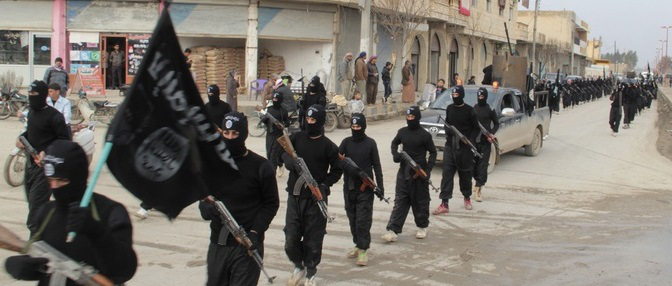


Posted in Uncategorized | Leave a comment